Goji Berries
Bright red berry rich in zeaxanthin and natural polysaccharides
What is this ingredient?
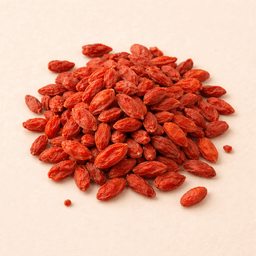
Goji berries (Lycium barbarum) are small orange-red fruits from Asia that have been used for centuries in teas, congee, soups, stews and sweet snack mixes. When dried, they have a chewy-soft texture and a flavor reminiscent of raisin, cranberry and tomato, with a lightly herbal undertone.
## Concentrated zeaxanthin
Goji berries stand out for their high zeaxanthin content, an orange carotenoid found in the fruit mainly as zeaxanthin dipalmitate. In nutrition research, this carotenoid profile is studied in relation to macular pigment and blood carotenoid levels. A 28 gram portion of dried goji berries is often used as a practical daily serving in studies and meal plans.
## Lycium barbarum polysaccharides
A second characteristic group of compounds is Lycium barbarum polysaccharides (LBP). These carbohydrate complexes make up about 5-8% of dry matter and consist of different sugar units, including arabinose, rhamnose, xylose, mannose, galactose and glucose. They give goji berries a distinct place in research on berries, dried fruit and plant bioactive compounds.
## Nutrition and culinary use
Dried goji berries provide fiber, plant protein and minerals such as iron, calcium, potassium and zinc. Their concentrated sweet-tart flavor works well in oatmeal, granola, rice porridge, trail mix, smoothies and warm infusions. Soak them briefly in warm water for a softer texture, or add them dry for extra chew.
How does it taste?
Mildly sweet and tart with a cranberry-like flavor and earthy undertone.
Pairs well with:
Pairs well with oatscocoagingerhoney and coconut.
Did you know...?
- Goji berries have been used for more than 2,000 years in Chinese tea, soup and food cultures.
- The goji plant is related to the tomato and potato — all three are nightshades.
Nutritional Value & Energy
Per 100g
Goji Berries provides energy thanks to natural nutrients , buffered by fiber.
Per 100g
Minerals
Vitamins
What's in a serving?
1 serving
Goji berries naturally contain Iron (6.8 mg per 100 g).
Goji berries naturally contain Potassium (1132 mg per 100 g).
Goji berries naturally contain Calcium (190 mg per 100 g).
Goji berries naturally contain Zinc (2 mg per 100 g).
Goji berries naturally contain Vitamin C (48 mg per 100 g).
Goji berries naturally contain Vitamin A (1341 mcg per 100 g).
% of daily reference intake (DRI)
EU-approved nutrition claims
This ingredient contains nutrients for which EFSA-authorized health claims exist (at nutrient level, not ingredient-specific).
Approved health claims (EU)
Vitamin_c EU 432/2012
Vitamin C contributes to the normal function of the immune system
Contains 48mg/100g (threshold: ≥12mg/100g)
Vitamin_c EU 432/2012
Vitamin C contributes to the reduction of tiredness and fatigue
Contains 48mg/100g (threshold: ≥12mg/100g)
Vitamin_c EU 432/2012
Vitamin C contributes to normal collagen formation for the normal function of skin
Contains 48mg/100g (threshold: ≥12mg/100g)
Zinc EU 432/2012
Zinc contributes to the normal function of the immune system
Contains 2mg/100g (threshold: ≥1.5mg/100g)
Zinc EU 432/2012
Zinc contributes to the maintenance of normal skin
Contains 2mg/100g (threshold: ≥1.5mg/100g)
Iron EU 432/2012
Iron contributes to normal energy-yielding metabolism
Contains 6.8mg/100g (threshold: ≥2.1mg/100g)
Iron EU 432/2012
Iron contributes to the reduction of tiredness and fatigue
Contains 6.8mg/100g (threshold: ≥2.1mg/100g)
Calcium EU 432/2012
Calcium is needed for the maintenance of normal bones
Contains 190mg/100g (threshold: ≥120mg/100g)
Potassium EU 432/2012
Potassium contributes to the maintenance of normal blood pressure
Contains 1132mg/100g (threshold: ≥300mg/100g)
Vitamin_a EU 432/2012
Vitamin A contributes to the normal function of the immune system
Contains 1341mcg/100g (threshold: ≥120mcg/100g)
Vitamin_a EU 432/2012
Vitamin A contributes to the maintenance of normal skin
Contains 1341mcg/100g (threshold: ≥120mcg/100g)
Vitamin_a EU 432/2012
Vitamin A contributes to the maintenance of normal mucous membranes
Contains 1341mcg/100g (threshold: ≥120mcg/100g)
Vitamin_a EU 432/2012
Vitamin A contributes to the maintenance of normal vision
Contains 1341mcg/100g (threshold: ≥120mcg/100g)
Vitamin_a EU 432/2012
Vitamin A contributes to normal iron metabolism
Contains 1341mcg/100g (threshold: ≥120mcg/100g)
Vitamin_a EU 432/2012
Vitamin A has a role in the process of cell specialisation
Contains 1341mcg/100g (threshold: ≥120mcg/100g)
Vitamin_c EU 432/2012
Vitamin C contributes to normal collagen formation for the normal function of blood vessels
Contains 48mg/100g (threshold: ≥12mg/100g)
Vitamin_c EU 432/2012
Vitamin C contributes to normal collagen formation for the normal function of bones
Contains 48mg/100g (threshold: ≥12mg/100g)
Vitamin_c EU 432/2012
Vitamin C contributes to normal collagen formation for the normal function of cartilage
Contains 48mg/100g (threshold: ≥12mg/100g)
Vitamin_c EU 432/2012
Vitamin C contributes to normal collagen formation for the normal function of gums
Contains 48mg/100g (threshold: ≥12mg/100g)
Vitamin_c EU 432/2012
Vitamin C contributes to normal collagen formation for the normal function of teeth
Contains 48mg/100g (threshold: ≥12mg/100g)
Vitamin_c EU 432/2012
Vitamin C contributes to normal energy-yielding metabolism
Contains 48mg/100g (threshold: ≥12mg/100g)
Vitamin_c EU 432/2012
Vitamin C contributes to normal functioning of the nervous system
Contains 48mg/100g (threshold: ≥12mg/100g)
Vitamin_c EU 432/2012
Vitamin C contributes to normal psychological function
Contains 48mg/100g (threshold: ≥12mg/100g)
Vitamin_c EU 432/2012
Vitamin C contributes to the protection of cells from oxidative stress
Contains 48mg/100g (threshold: ≥12mg/100g)
Vitamin_c EU 432/2012
Vitamin C contributes to the regeneration of the reduced form of vitamin E
Contains 48mg/100g (threshold: ≥12mg/100g)
Vitamin_c EU 432/2012
Vitamin C increases iron absorption
Contains 48mg/100g (threshold: ≥12mg/100g)
Vitamin_c EU 432/2012
Vitamin C contributes to maintain the normal function of the immune system during and after intense physical exercise
Contains 48mg/100g (threshold: ≥12mg/100g)
Calcium EU 432/2012
Calcium is needed for the maintenance of normal teeth
Contains 190mg/100g (threshold: ≥120mg/100g)
Calcium EU 432/2012
Calcium contributes to normal blood clotting
Contains 190mg/100g (threshold: ≥120mg/100g)
Calcium EU 432/2012
Calcium contributes to normal energy-yielding metabolism
Contains 190mg/100g (threshold: ≥120mg/100g)
Calcium EU 432/2012
Calcium contributes to normal muscle function
Contains 190mg/100g (threshold: ≥120mg/100g)
Calcium EU 432/2012
Calcium contributes to normal neurotransmission
Contains 190mg/100g (threshold: ≥120mg/100g)
Calcium EU 432/2012
Calcium contributes to the normal function of digestive enzymes
Contains 190mg/100g (threshold: ≥120mg/100g)
Calcium EU 432/2012
Calcium has a role in the process of cell division and specialisation
Contains 190mg/100g (threshold: ≥120mg/100g)
Iron EU 432/2012
Iron contributes to normal cognitive function
Contains 6.8mg/100g (threshold: ≥2.1mg/100g)
Iron EU 432/2012
Iron contributes to normal formation of red blood cells and haemoglobin
Contains 6.8mg/100g (threshold: ≥2.1mg/100g)
Iron EU 432/2012
Iron contributes to normal oxygen transport in the body
Contains 6.8mg/100g (threshold: ≥2.1mg/100g)
Iron EU 432/2012
Iron contributes to the normal function of the immune system
Contains 6.8mg/100g (threshold: ≥2.1mg/100g)
Iron EU 432/2012
Iron has a role in the process of cell division
Contains 6.8mg/100g (threshold: ≥2.1mg/100g)
Zinc EU 432/2012
Zinc contributes to normal acid-base metabolism
Contains 2mg/100g (threshold: ≥1.5mg/100g)
Zinc EU 432/2012
Zinc contributes to normal carbohydrate metabolism
Contains 2mg/100g (threshold: ≥1.5mg/100g)
Zinc EU 432/2012
Zinc contributes to normal cognitive function
Contains 2mg/100g (threshold: ≥1.5mg/100g)
Zinc EU 432/2012
Zinc contributes to normal DNA synthesis
Contains 2mg/100g (threshold: ≥1.5mg/100g)
Zinc EU 432/2012
Zinc contributes to normal fertility and reproduction
Contains 2mg/100g (threshold: ≥1.5mg/100g)
Zinc EU 432/2012
Zinc contributes to normal macronutrient metabolism
Contains 2mg/100g (threshold: ≥1.5mg/100g)
Zinc EU 432/2012
Zinc contributes to normal metabolism of fatty acids
Contains 2mg/100g (threshold: ≥1.5mg/100g)
Zinc EU 432/2012
Zinc contributes to normal metabolism of vitamin A
Contains 2mg/100g (threshold: ≥1.5mg/100g)
Zinc EU 432/2012
Zinc contributes to normal protein synthesis
Contains 2mg/100g (threshold: ≥1.5mg/100g)
Zinc EU 432/2012
Zinc contributes to the maintenance of normal bones
Contains 2mg/100g (threshold: ≥1.5mg/100g)
Zinc EU 432/2012
Zinc contributes to the maintenance of normal hair
Contains 2mg/100g (threshold: ≥1.5mg/100g)
Zinc EU 432/2012
Zinc contributes to the maintenance of normal nails
Contains 2mg/100g (threshold: ≥1.5mg/100g)
Zinc EU 432/2012
Zinc contributes to the maintenance of normal testosterone levels in the blood
Contains 2mg/100g (threshold: ≥1.5mg/100g)
Zinc EU 432/2012
Zinc contributes to the maintenance of normal vision
Contains 2mg/100g (threshold: ≥1.5mg/100g)
Zinc EU 432/2012
Zinc contributes to the protection of cells from oxidative stress
Contains 2mg/100g (threshold: ≥1.5mg/100g)
Zinc EU 432/2012
Zinc has a role in the process of cell division
Contains 2mg/100g (threshold: ≥1.5mg/100g)
Potassium EU 432/2012
Potassium contributes to normal functioning of the nervous system
Contains 1132mg/100g (threshold: ≥300mg/100g)
Potassium EU 432/2012
Potassium contributes to normal muscle function
Contains 1132mg/100g (threshold: ≥300mg/100g)
Comparison
vsspinazie
Goji berries contain about 3× more iron per 100 g than spinach.
vsbanaan
Goji berries contain about 3× more potassium per 100 g than banana.
vsmelk
Goji berries contain about 2× more calcium per 100 g than milk.
What's being researched?
Zeaxanthin and macular pigment
Goji berries contain high concentrations of zeaxanthin, mainly as zeaxanthin dipalmitate. Clinical nutrition studies examine the relationship between goji intake, blood carotenoids and macular pigment measurements.
Supported by: [3] Vidović BB (2019) , [2] Tang WM (2015)
Polysaccharides and cell marker research
Lycium barbarum polysaccharides (LBP) in goji berries are studied in cell, animal and nutrition research. Research looks at antioxidant enzymes, inflammatory markers and interactions with gut microbiota, while standardized clinical evidence is still limited.
Supported by: [2] Tang WM (2015)
Recipes with Goji Berries
Discover delicious recipes featuring goji berries:
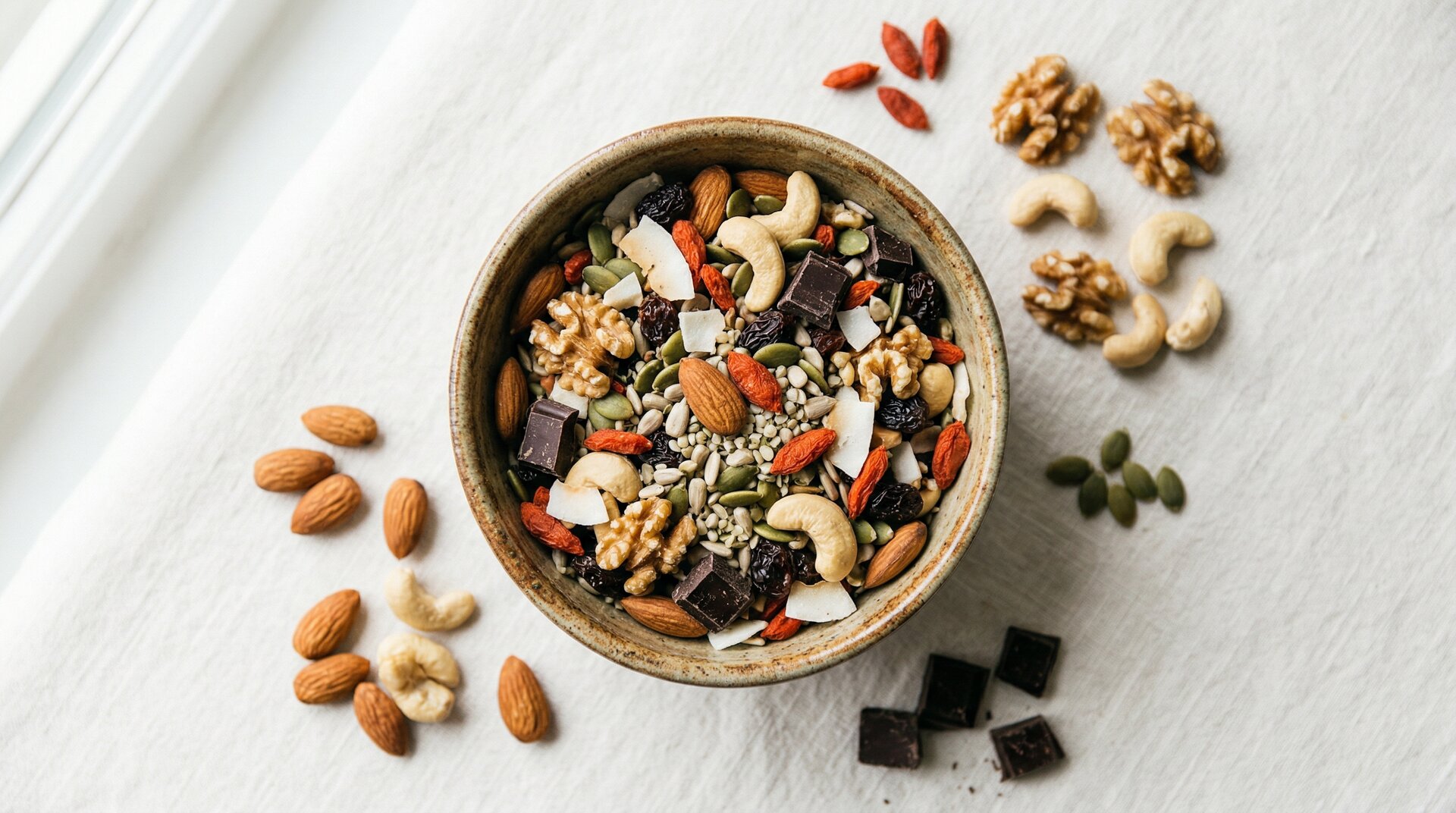 Trail Mix with Nuts, Seeds and Dark Chocolate 25 min Crunchy snack mix with toasted nuts, raisins and goji berries
  286 kcal
  8g protein 2 synergies
  In the Kitchen
Storage
Location:Pantry
Shelf life:12 maanden in luchtdichte verpakking op koele, droge plaats
Store dried goji berries in a sealed glass jar or airtight container in a cool, dark place. Use within 6 months after opening for the best flavor and texture. You can also freeze them for longer storage.
Preparation
Eat goji berries directly as a snack, add them to smoothies, yogurt, oatmeal, muesli or rice porridge, or use them in tea and light broths. For a softer texture, soak 1-2 tablespoons in warm water for 5-10 minutes. Add them near the end of hot dishes so their color and flavor stay bright.
Conversions
Substitutes
Smart preparation
1Soak goji berries for 10 minutes in warm water before using them in smoothies, oatmeal or rice porridge.
2Add dried goji berries to granola, trail mix or nut mixes.
3Use the soaking water too in smoothies or tea.
Caution / Warnings
Goji Berries is very safe, but there are scientific considerations:
Blood thinners (warfarin, coumarin) Moderate
Interactions have been reported between goji berries and coumarin-type blood thinners. This may be relevant for INR monitoring and dosing agreements.
Advice:
Do not use goji berries daily or in large amounts together with blood thinners without guidance. Consult your doctor or pharmacist if you want to eat them regularly.
Diabetes medication Moderate
Goji berries provide concentrated carbohydrates and are discussed in research involving glucose measurements. Portion control is important when using medication.
Advice:
Keep the serving small and combine with a meal or a source of protein/fat. Monitor your values according to your personal plan and seek advice for regular use.
Blood pressure medication Mild
Because of their high potassium content, goji berries may be relevant for people using medication where potassium or blood pressure monitoring is needed.
Advice:
Eat normal portions and seek advice for daily use, kidney problems or medication that can affect potassium levels.
Pregnancy and breastfeeding Mild
There is insufficient nutrition research to generally recommend specific amounts of goji berries during pregnancy and breastfeeding.
Advice:
Keep to small culinary portions and consult a doctor, midwife or dietitian if unsure or if using them daily.
Traditional use
Traditional Chinese Medicine
Chinese tea and soup tradition
Goji berries (gou qi zi) have been used for more than 2000 years in Chinese food culture, especially in warm infusions, rice porridge, broths and soups. They are valued for their orange-red color, softly sweet flavor and symbolic place in seasonal dishes.
Summary
Goji berries are dried orange-red berries with high levels of zeaxanthin, Lycium barbarum polysaccharides (LBP), fiber, vitamin C, vitamin A, iron and calcium. They work well in oatmeal, tea, smoothies, trail mix and Asian soups. A practical serving is about one handful or 28-30 grams. Be careful when using blood thinners, diabetes medication or blood pressure medication: discuss regular use with your doctor.