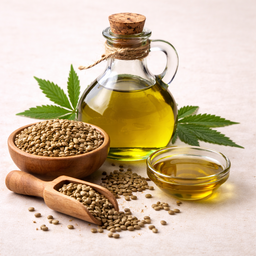
Flaxseed Oil
Cold-pressed oil rich in plant omega-3 ALA
What is this ingredient?
## Cold-pressed oil with plenty of plant omega-3
Flaxseed oil stands out among plant oils because of its high level of alpha-linolenic acid (ALA), an essential omega-3 fatty acid that must come from food. The oil has a distinct taste, is sensitive to heat and light, and is best used in cold preparations.
Fatty acid profile (per 100 g):
- ALA (alpha-linolenic acid): often 53-62 g, depending on origin and pressing method
- Omega-6 (linoleic acid): about 14-17 g
- Omega-6:omega-3 ratio: usually around 1:3 to 1:4
- Saturated fat: low compared with many solid fats
Other nutritional components:
- Vitamin E: about 17 mg per 100 g; vitamin E contributes to the protection of cells from oxidative stress
- Lignans: plant polyphenols best known from flaxseed; the amount in oil depends strongly on filtration and production method
- Golden color and nutty aroma: signs of fresh, carefully pressed oil
Production and quality:
1. Cold-pressed: seeds are pressed at low temperature to preserve the fatty acid profile as well as possible.
2. Filtered: sediment is removed for a clear oil with a milder texture.
3. Protected packaging: dark bottles and sometimes nitrogen flushing limit contact with light and oxygen.
Research context:
ALA, flaxseed oil, and lignans are studied in nutrition research on fatty acid patterns, blood lipids, oxidative markers, and plant-based dietary patterns. Results vary by study design, dose, duration, and population. For consumer text, the most robust permitted wording is that flaxseed oil naturally contains ALA and vitamin E; vitamin E contributes to the protection of cells from oxidative stress.
Important in the kitchen:
Do not heat flaxseed oil. Its smoke point is low and the unsaturated fatty acids oxidize quickly with heat. Use it cold: in salad dressings, smoothies, quark, yogurt, hummus, or as a final drizzle over cooked vegetables and potatoes.
How does it taste?
Mildly nutty and grassy with a gentle bitterness and an oily, seed-like nuance.
Pairs well with:
Pairs well with quarkyogurtpotatocooked vegetablesflaxseedhoneyand mild dressings.
Did you know...?
- Linseed oil has been used for centuries in both food and craft, including as an ingredient in oil paint and wood finishing.
- The flavor of flaxseed oil changes quickly if the bottle stays warm or open too long; a bitter, paint-like smell points to rancidity.
Nutritional Value & Energy
Per 100ml
Flaxseed Oil provides energy thanks to natural nutrients .
Per 100g
Minerals
Vitamins
Omega-3 fatty acids
More nutrients
Trace Minerals
What's in a serving?
1 tablespoon
Flaxseed oil naturally contains vitamin E (17 mg per 100 g).
% of daily reference intake (DRI)
EU-approved nutrition claims
This ingredient contains nutrients for which EFSA-authorized health claims exist (at nutrient level, not ingredient-specific).
Approved health claims (EU)
Vitamin_e EU 432/2012
Vitamin E contributes to the protection of cells from oxidative stress
Contains 17mg/100g (threshold: ≥1.8mg/100g)
What's being researched?
ALA in flaxseed oil
Alpha-linolenic acid (ALA) in flaxseed oil is studied in nutrition research on fatty acid profiles, blood lipids, and plant-based eating patterns. Available studies differ in dose, duration, and population, so consumer text should stay cautious and nutrient-focused.
Supported by: [1] Pan A (2012)
Flaxseed oil and oxidative markers
Flaxseed oil is studied in clinical nutrition studies with markers such as CRP and other measurements. Results are not uniform and relate to study duration, background diet, and the amount of oil used.
Supported by: [2] Mirfatahi M (2012)
Good Combinations (Synergy)
Combine flaxseed oil smartly to enhance the effect:
Flaxseed Oil  Turmeric
 ALA omega-3 + curcumin + piperine: three complementary biochemical pathways
Technical: Flaxseed oil provides 53g ALA omega-3 per 100ml — the most concentrated plant omega-3 source. ALA converts to EPA (5-10% conversion) producing series-3 prostaglandins. Curcumin (2-5% in turmeric) modulates NF-κB with IC50 1-5μM. Piperine from black pepper (5-9%) inhibits glucuronidation, increasing curcumin bioavailability by 2,000%. Flaxseed oil dissolves curcumin (fat-soluble) and the three compounds reach complementary biochemical pathways.
What does this mean for you? Mix flaxseed oil with turmeric and black pepper as golden dressing (cold). Three bioactive compounds in one dressing that work via complementary pathways. Don't heat — ALA is heat-sensitive.
Flaxseed Oil 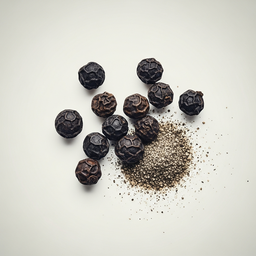 Black Pepper
 ALA omega-3 + curcumin + piperine: three complementary biochemical pathways
Technical: Flaxseed oil provides 53g ALA omega-3 per 100ml — the most concentrated plant omega-3 source. ALA converts to EPA (5-10% conversion) producing series-3 prostaglandins. Curcumin (2-5% in turmeric) modulates NF-κB with IC50 1-5μM. Piperine from black pepper (5-9%) inhibits glucuronidation, increasing curcumin bioavailability by 2,000%. Flaxseed oil dissolves curcumin (fat-soluble) and the three compounds reach complementary biochemical pathways.
What does this mean for you? Mix flaxseed oil with turmeric and black pepper as golden dressing (cold). Three bioactive compounds in one dressing that work via complementary pathways. Don't heat — ALA is heat-sensitive.
Flaxseed Oil 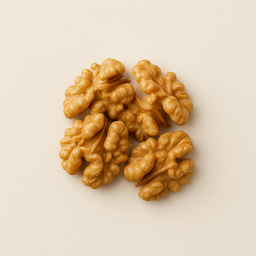 Walnuts
 Double ALA dose for plant-based omega-3
Technical: Flaxseed oil is the richest plant-based ALA source (50-60% alpha-linolenic acid), walnuts contain 9% ALA (2.5g per 30g serving). Together they provide 5-10g ALA per meal — more than 5x the recommended daily intake (1.1-1.6g). ALA is the precursor of EPA/DHA (conversion 5-10%). Both also contain ellagic acid, a polyphenol.
What does this mean for you? Make a salad dressing with flaxseed oil and garnish with walnuts — the richest plant-based omega-3 combination. Ideal for vegans, vegetarians or people with fish allergy who want to get enough omega-3.
Flaxseed Oil  Salmon
 ALA + EPA/DHA for complete omega-3 spectrum
Technical: Flaxseed oil provides 50-60% ALA (alpha-linolenic acid), the plant-based omega-3 precursor. Salmon delivers direct EPA (1.8g/100g) and DHA (1.2g/100g), the active omega-3 forms. ALA-to-EPA/DHA conversion in the body is low (5-10%), so direct EPA/DHA from salmon is more effective for tissue building. By combining both sources you get direct EPA/DHA + ALA as continuous precursor.
What does this mean for you? Make a salmon salad with flaxseed oil as dressing — you get the complete omega-3 spectrum in one meal. The flaxseed oil supplements what even salmon doesn't provide: a continuous stream of the precursor ALA.
 In the Kitchen
Storage
Location:Refrigerator
Shelf life:Ongeopend: 6-12 maanden (gekoeld). Geopend: 6-8 weken (gekoeld, donker). Ranzig na 1-2 weken bij kamertemperatuur!
ALA oxidizes quickly with heat, light, and oxygen. Store flaxseed oil in the refrigerator, preferably in a dark bottle with the cap tightly closed. Fresh oil smells nutty and mild; rancid oil smells bitter, sharp, or paint-like. Discard rancid oil.
Preparation
Do not heat: the smoke point is low and the unsaturated fatty acids are delicate. Use flaxseed oil cold in salads, smoothies, quark, yogurt, oatmeal, hummus, or pesto. Add it only after cooking as a finish over vegetables, potatoes, or grains.
Conversions
Substitutes
Smart preparation
1Use flaxseed oil only cold; do not heat it in a pan or oven.
Why?
The unsaturated fatty acids are sensitive to heat and quickly lose quality when heated.
2Store flaxseed oil in the fridge and use it within 6 weeks of opening for the best flavor.
3Add flaxseed oil only after preparation to smoothies, yogurt, quark, or warm vegetables.
Caution / Warnings
Flaxseed Oil is very safe, but there are scientific considerations:
Blood thinners such as warfarin or aspirin Moderate
Flaxseed oil contains a high amount of ALA. High intakes of omega-3 fatty acids may affect platelet function and bleeding time, especially when combined with anticoagulant medication or aspirin. The effect depends on dose, medication, and personal situation.
Advice:
If you use blood thinners, consult your doctor or pharmacist before taking flaxseed oil daily. Do not start high doses without personal advice, and report changes in supplements or oil intake.
Pregnancy: second and third trimester Moderate
During pregnancy, caution is sensible with concentrated intakes of oils or supplements. Studies on high ALA intake during later pregnancy are not consistent and use different doses, food sources, and populations.
Advice:
If you are pregnant, use flaxseed oil as a regular kitchen oil in small amounts and discuss daily or supplemental use with your midwife, doctor, or dietitian.
Hormone-sensitive conditions or treatment Mild
Lignans from flaxseed can be converted in the body into enterolignans with weak estrogen-like activity. With hormone-sensitive conditions or ongoing treatment, individual assessment may be important.
Advice:
If you have a hormone-sensitive condition or treatment, consult your doctor or dietitian before using flaxseed oil or flaxseed products daily in larger amounts.
Oxidation and rancidity: do not heat Severe
Flaxseed oil has a low smoke point and contains many unsaturated fatty acids. Heat, light, and oxygen speed up oxidation, making the flavor bitter or paint-like and reducing the oil’s quality.
Advice:
Use flaxseed oil only cold. Store it in the refrigerator, in a dark bottle with the cap tightly closed, and use within 6-8 weeks after opening. Discard if it smells or tastes rancid.
Traditional use
Other
Linseed oil in European culinary and craft traditions
Linseed oil was used in Europe as a food oil in cold preparations and was also valued in crafts such as wood finishing, varnish, and oil paint. This dual role explains why the oil has a long history in both kitchens and workshops.
Summary
Flaxseed oil is a cold-pressed oil with plenty of plant omega-3 ALA, a nutty taste, and a very sensitive fatty acid profile. It works best in cold dishes such as salads, smoothies, yogurt, quark, hummus, or as a finish over warm vegetables after cooking. Vitamin E contributes to the protection of cells from oxidative stress. Store the oil chilled, dark, and tightly closed, and use it within 6-8 weeks after opening.