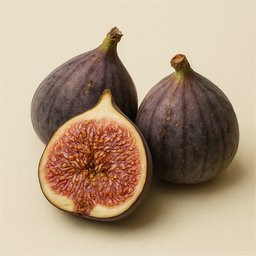
Figs
A sweet Mediterranean fruit for fresh and dried use
What is this ingredient?
Figs (Ficus carica) are among the oldest cultivated fruits in the world, with archaeological evidence of very early cultivation in the eastern Mediterranean. Fresh figs are soft, juicy and honey-sweet; dried figs are more concentrated, sweeter and firmer in texture.
## Fresh and dried
Fresh figs are delicate and have a short shelf life, so they are best enjoyed in season. Dried figs are more concentrated in flavour, sugars and nutrients per 100 grams and are often used in compotes, tagines, bread, baking and energy-dense snacks.
## Composition and research
Figs naturally contain fibre, minerals and plant polyphenols. Dried figs are studied, among other things, for their fibre and mineral profile, but there are no EFSA-authorized ingredient-specific health claims for figs. For everyday use, portion size matters, because dried figs are concentrated and sweet.
## In the kitchen
Figs pair well with goat cheese, walnuts, honey, rosemary, yogurt and olive oil. Fresh figs are good raw or briefly grilled; dried figs can be soaked in warm water or tea for a softer texture.
How does it taste?
Honey-sweet and jammy with earthy undertones and crunchy seeds.
Pairs well with:
Pairs well with goat cheeseprosciuttowalnuthoney and rosemary.
Sunnah
By the fig and the olive. Allah swears by the fig and olive due to their value and blessings.
Quran #Surah At-Tin 95:1-2
Did you know...?
- The fig was one of the first fruits cultivated by humans, around 9,400 BCE.
- Many fig species have their own fig wasp that pollinates them in nature.
Nutritional Value & Energy
Per 100g
Figs provides energy thanks to natural nutrients , buffered by fiber.
Per 100g
Minerals
Vitamins
Omega-3 fatty acids
More nutrients
B-Vitamins
Trace Minerals
What's in a serving?
1 serving
% of daily reference intake (DRI)
EU-approved nutrition claims
There are currently no EFSA-authorized health claims specific to figs.
What's being researched?
Fibre, sorbitol and bowel regularity
Fibre and sorbitol in figs, especially dried figs, are being studied in relation to stool frequency and consistency. Results depend on portion size, tolerance and individual sensitivity.
Supported by: [1] Tikent A (2025) , [2] Badgujar (2014)
Calcium and mineral profile
The calcium and mineral profile of figs is being studied, especially in dried figs. There is no EFSA-authorized ingredient-specific health claim for figs; bioavailability and practical relevance vary by dietary pattern.
Supported by: [1] Tikent A (2025)
Good Combinations (Synergy)
Combine figs smartly to enhance the effect:
Figs 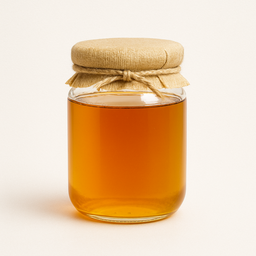 Honey
Honey Prebiotic FOS + enzymatic honey compounds for gut flora
Technical: Figs contain fructo-oligosaccharides (FOS, 3-5g/100g dried) selectively feeding Bifidobacterium and Lactobacillus. Studies show 40% increase in bifido population after 4 weeks fig consumption. Honey provides glucose oxidase producing H2O2, plus defensin-1 — bioactive peptides that influence the composition of the gut microbiome. FOS from figs stimulate growth of beneficial bacteria, while bioactive compounds from honey support microbiome balance.
What does this mean for you? Drizzle honey over fresh or dried figs as dessert or snack. This Middle Eastern combination is thousands of years old and offers powerful prebiotic action. The FOS in figs feed good gut bacteria, the bioactive compounds in honey support a healthy microbiome.
Figs 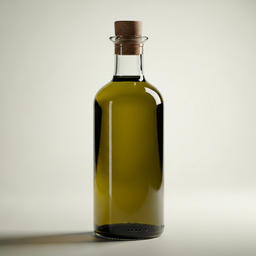 Olive Oil
 Traditional Mediterranean combination for gut transit
Technical: Figs contain ficin — a proteolytic enzyme promoting protein digestion — plus 2.9g fiber per 100g (insoluble: cellulose/lignin). Olive oil lubricates the intestinal wall and speeds fecal transit. The combination of fig fiber + olive oil lubrication provides dual support: fiber volume drives peristalsis, oil reduces friction. An Italian-Greek culinary tradition for digestive comfort. Serve fresh figs with extra virgin olive oil and sea salt.
What does this mean for you? Halve fresh figs and drizzle with extra virgin olive oil — a classic Mediterranean appetizer. The fiber from figs and the healthy fats from olive oil support your digestion in two ways. Delicious on its own or with prosciutto and burrata.
Figs 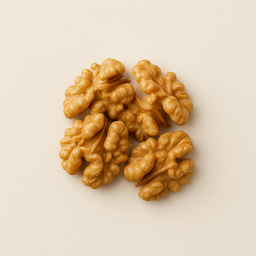 Walnuts
 Calcium + omega-3 for normal bones
Technical: Dried figs contain 162mg calcium per 100g (13% RDI) — the highest calcium concentration of all fruits. Walnuts provide 9.08g ALA omega-3 per 100g (highest of all nuts) plus 158mg magnesium. Calcium is needed for the maintenance of normal bones (EFSA), and the 2:1 calcium-magnesium ratio suits bone mineralization well. Walnuts provide ALA that is partly converted to EPA.
What does this mean for you? Figs with walnuts is a powerful bone-supporting snack. The calcium from figs contributes to normal bones (EFSA), the walnuts provide omega-3. Ideal for women 40+, athletes and anyone wanting to maintain strong bones.
Recipes with Figs
Discover delicious recipes featuring figs:
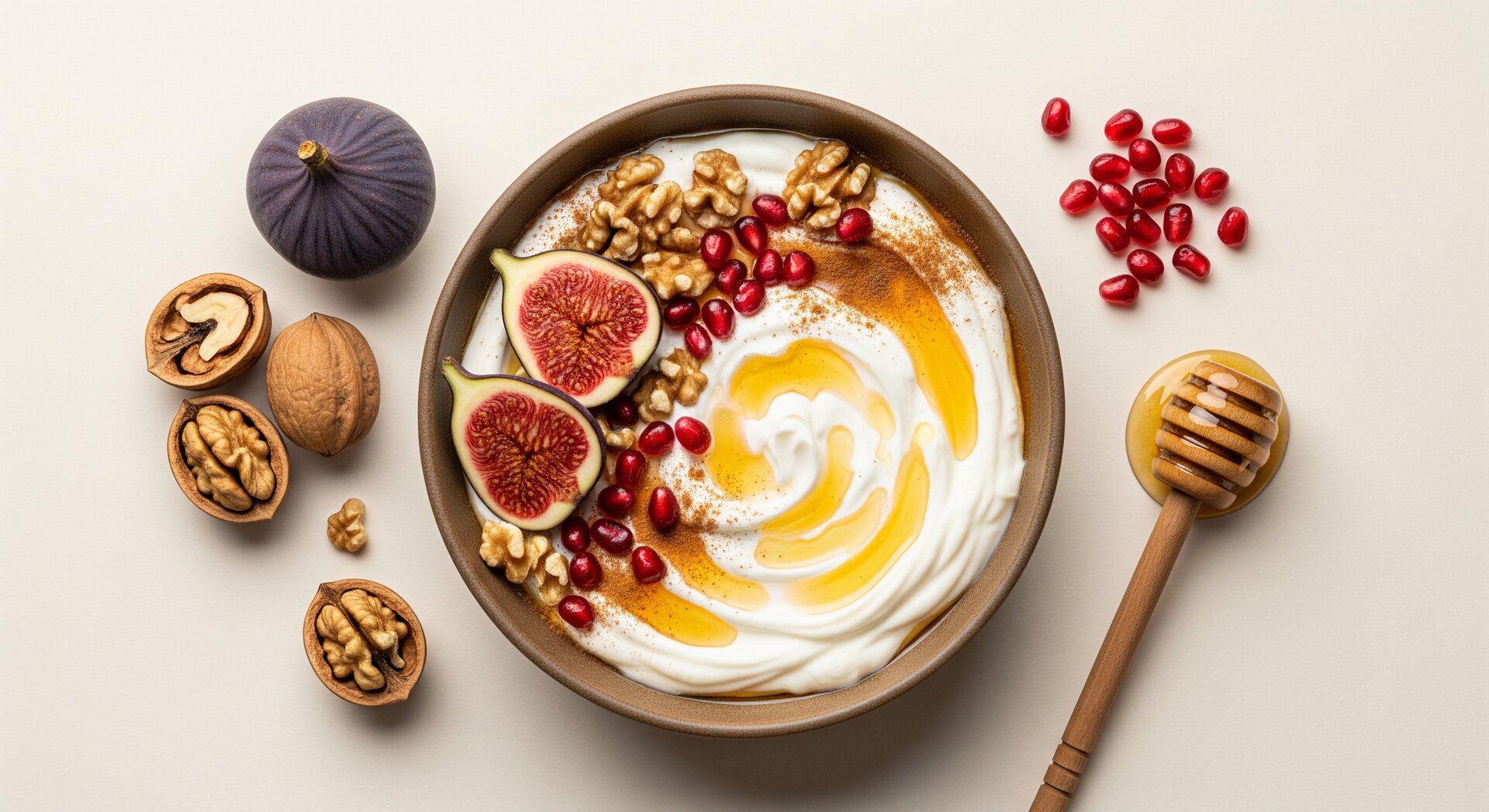 Greek Yogurt Bowl with Honey and Walnuts 5 min Creamy, fresh and lightly nutty
  380 kcal
  18g protein 1 synergies
 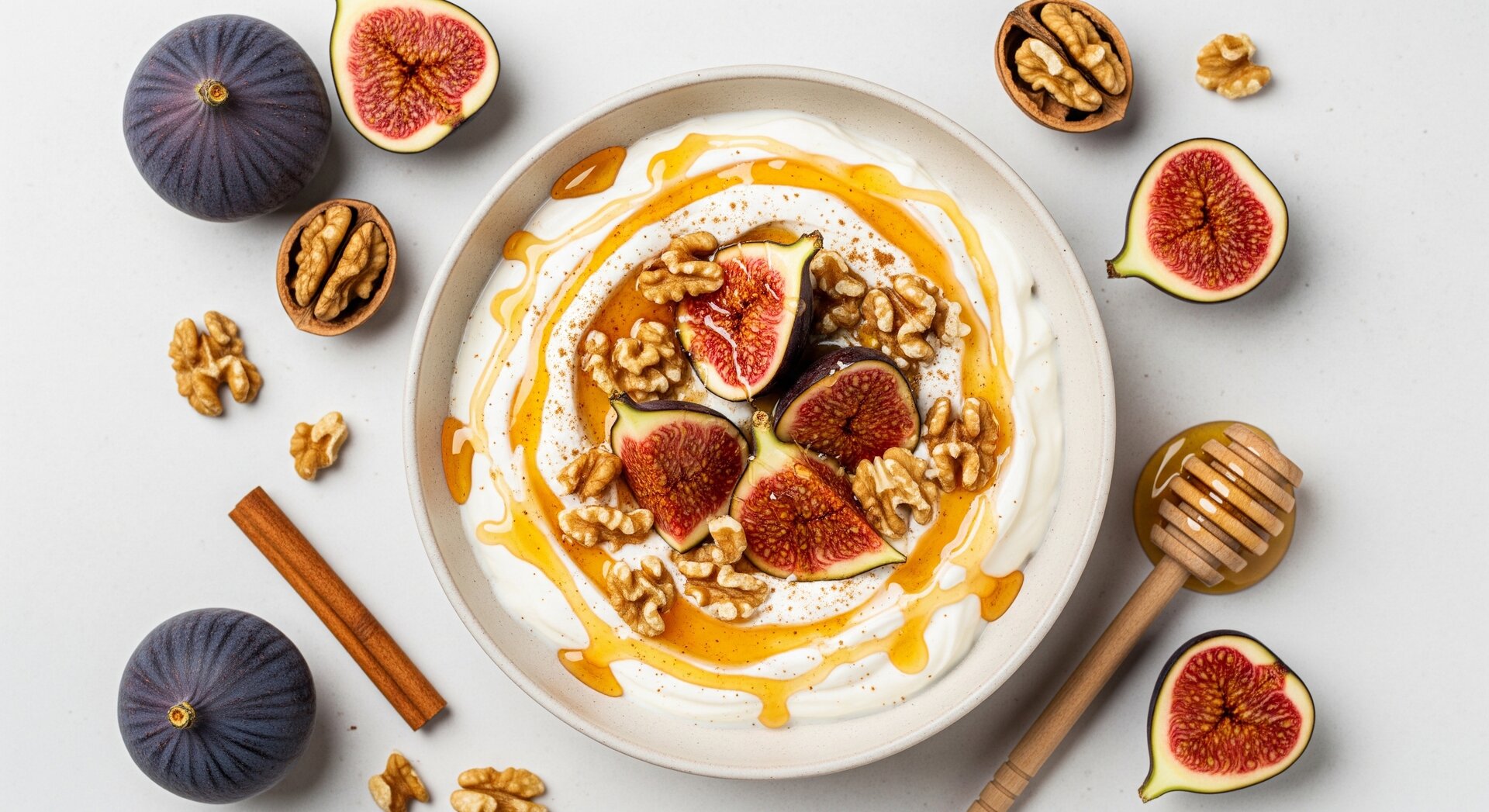 Greek Yogurt with Walnuts, Honey and Figs 8 min Mediterranean yogurt bowl with caramelised figs and crunchy walnuts 356 kcal 19g protein 2 synergies
  In the Kitchen
Storage
Location:Refrigerator
Shelf life:1 week vers, 6 maanden gedroogd
Fresh figs are very perishable: store them in the fridge and eat them soon. Dried figs can be kept in an airtight container in a cool, dry place.
Preparation
Fresh: eat raw, briefly grill or combine with yogurt, goat cheese or nuts. Dried: soak in warm water or tea for compotes, tagines, bread or baking. Olive oil pairs well with figs for flavour and texture.
Conversions
Substitutes
Smart preparation
1Cut fresh figs just before serving; they oxidize quickly.
2Halve fresh figs and grill them briefly for a warm, soft texture.
3Soak dried figs in warm water or tea before using them in compotes.
Caution / Warnings
Figs is very safe, but there are scientific considerations:
Diabetes or blood sugar management Moderate
Figs naturally contain sugars; dried figs are more concentrated than fresh figs.
Advice:
Keep portions small, especially with dried figs. Discuss personal advice with a doctor or dietitian.
Kidney stones or oxalate sensitivity Moderate
Figs contain oxalates, which may be relevant for people with a history of calcium oxalate kidney stones.
Advice:
Limit intake if you have a personal history of kidney stones and seek medical advice if unsure.
Traditional use
Islamic tradition
Quranic reference to the fig
The fig is mentioned by name in Surah At-Tin. In Islamic and Mediterranean food cultures, the fruit therefore also has strong cultural and symbolic meaning.
Mediterranean
Mediterranean food culture
Figs have been grown and eaten around the Mediterranean for thousands of years, fresh in summer and dried as a shelf-stable food for later in the year.
Summary
Figs are ancient Mediterranean fruits with a soft, honey-sweet taste. Fresh figs are delicate and seasonal; dried figs are more concentrated and useful in compotes, salads, breakfasts and baking. Because of their natural sugars and sorbitol, a small portion of dried figs is usually enough.