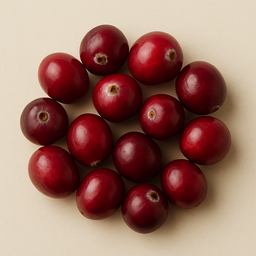
Cranberries
The Bladder Protector
What is this ingredient?
Cranberries (Vaccinium macrocarpon) are small, tart berries from North America with unique documented properties. They contain proanthocyanidins (PACs) with a specific A-type linkage that prevents E. coli bacteria from adhering to the bladder wall - the mechanism behind bladder infections. Multiple meta-analyses associate cranberry consumption with reduced risk of recurrent urinary tract infections. The red color comes from anthocyanins, powerful antioxidants. Note: most cranberry juices contain a lot of added sugar. Choose unsweetened juice or supplements with standardized PAC concentration.
How does it taste?
Firmly tart and astringent with a mildly bitter, fruity tone.
Pairs well with:
Pairs well with orangepecansrosemarypoultry and ginger.
Did you know...?
- Cranberries do not grow underwater; the fields are only flooded for harvesting.
- Ripe cranberries bounce like a ball; this was traditionally how ripeness was tested.
Nutritional Value & Energy
Per 100g
Cranberries is low in calories thanks to natural nutrients , buffered by fiber.
Per 100g
Minerals
Vitamins
Omega-3 fatty acids
More nutrients
B-Vitamins
Trace Minerals
What's in a serving?
1 serving
Cranberries naturally contains vitamin c (22 mg per 100 g).
Cranberries naturally contains vitamin e (6 mg per 100 g).
% of daily reference intake (DRI)
EU-approved nutrition claims
This ingredient contains nutrients for which EFSA-authorized health claims exist (at nutrient level, not ingredient-specific).
Approved health claims (EU)
Vitamin_c EU 432/2012
Vitamin C contributes to the normal function of the immune system
Contains 22mg/100g (threshold: ≥12mg/100g)
Vitamin_c EU 432/2012
Vitamin C contributes to the reduction of tiredness and fatigue
Contains 22mg/100g (threshold: ≥12mg/100g)
Vitamin_c EU 432/2012
Vitamin C contributes to normal collagen formation for the normal function of skin
Contains 22mg/100g (threshold: ≥12mg/100g)
Vitamin_c EU 432/2012
Vitamin C contributes to normal collagen formation for the normal function of blood vessels
Contains 22mg/100g (threshold: ≥12mg/100g)
Vitamin_c EU 432/2012
Vitamin C contributes to normal collagen formation for the normal function of bones
Contains 22mg/100g (threshold: ≥12mg/100g)
Vitamin_c EU 432/2012
Vitamin C contributes to normal collagen formation for the normal function of cartilage
Contains 22mg/100g (threshold: ≥12mg/100g)
Vitamin_c EU 432/2012
Vitamin C contributes to normal collagen formation for the normal function of gums
Contains 22mg/100g (threshold: ≥12mg/100g)
Vitamin_c EU 432/2012
Vitamin C contributes to normal collagen formation for the normal function of teeth
Contains 22mg/100g (threshold: ≥12mg/100g)
Vitamin_c EU 432/2012
Vitamin C contributes to normal energy-yielding metabolism
Contains 22mg/100g (threshold: ≥12mg/100g)
Vitamin_c EU 432/2012
Vitamin C contributes to normal functioning of the nervous system
Contains 22mg/100g (threshold: ≥12mg/100g)
Vitamin_c EU 432/2012
Vitamin C contributes to normal psychological function
Contains 22mg/100g (threshold: ≥12mg/100g)
Vitamin_c EU 432/2012
Vitamin C contributes to the protection of cells from oxidative stress
Contains 22mg/100g (threshold: ≥12mg/100g)
Vitamin_c EU 432/2012
Vitamin C contributes to the regeneration of the reduced form of vitamin E
Contains 22mg/100g (threshold: ≥12mg/100g)
Vitamin_c EU 432/2012
Vitamin C increases iron absorption
Contains 22mg/100g (threshold: ≥12mg/100g)
Vitamin_c EU 432/2012
Vitamin C contributes to maintain the normal function of the immune system during and after intense physical exercise
Contains 22mg/100g (threshold: ≥12mg/100g)
What's being researched?
Proanthocyanidins and urinary tract research
A-type proanthocyanidins in cranberries are being studied for potential prevention of urinary tract infections through anti-adhesion effects. Meta-analyses show modest but significant results, especially for recurrent infections.
Supported by: [2] Howell (2005)
Polyphenols and cardiovascular markers
Polyphenols in cranberries are being studied for potential effects on cardiovascular risk factors. Clinical studies show promising effects on HDL cholesterol and vascular function.
Supported by: [4] Heiss (2022)
Good Combinations (Synergy)
Combine cranberries smartly to enhance the effect:
Cranberries 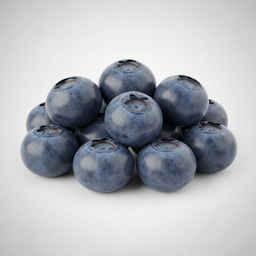 Blueberries
 Double anthocyanin power: A-type PACs + malvidin/delphinidin
A-type PACs from cranberries prevent bacterial adhesion (PMID: 12804452)
Technical: Cranberries contain unique A-type proanthocyanidins (PACs) that prevent bacteria from adhering to the bladder wall. Blueberries contain anthocyanins (malvidin, delphinidin) that cross the blood-brain barrier and reduce neuronal oxidative stress. Together they cover a broad spectrum of bioactive pathways — cranberries for the urinary tract, blueberries for neuronal tissues.
What does this mean for you? Mix cranberries and blueberries in a smoothie or muesli for a powerful antioxidant combination. Cranberries give a tart freshness, blueberries creamy sweetness. Together a perfect color combination, rich in complementary anthocyanins.
Cranberries 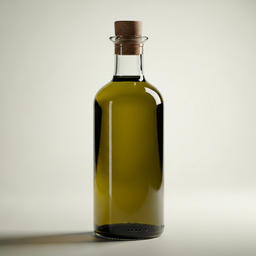 Olive Oil
 Fat improves absorption of fat-soluble antioxidants from cranberries
Technical: Cranberries contain carotenoids and vitamin E that are fat-soluble. The mono-unsaturated fats in olive oil (70% oleic acid) increase bioavailability of these compounds through micelle formation in the gut.
What does this mean for you? Use cranberries in salads with olive oil dressing, or cook them in dishes with olive oil for maximum absorption of all nutrients.
Cranberries 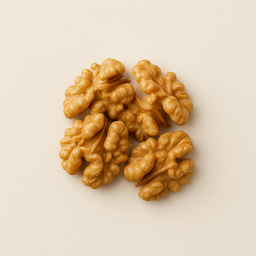 Walnuts
 Omega-3 + proanthocyanidins for heart and vessels
Technical: Cranberries are rich in polyphenols and proanthocyanidins that inhibit LDL oxidation. Walnuts contain ALA (omega-3). Alpha-linolenic acid contributes to the maintenance of normal blood cholesterol levels (EFSA). Together they provide complementary plant compounds through different biochemical pathways.
What does this mean for you? A handful of dried cranberries with walnuts is an ideal snack. Add to salads or oatmeal.
Cranberries 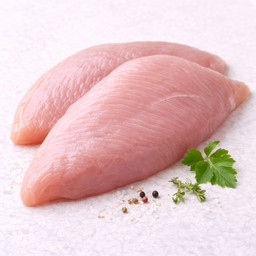 Turkey Breast
 Thanksgiving classic: tryptophan + polyphenols
Technical: Turkey contains 290mg tryptophan per 100g (precursor for serotonin/melatonin) and B vitamins. Cranberries contain proanthocyanidins (PACs) with strong antioxidant action. The carbohydrates in cranberry sauce also increase tryptophan transport to the brain via insulin response.
What does this mean for you? The drowsiness after Thanksgiving partly comes from tryptophan + carbs. Cranberry sauce with turkey isn't just tradition but also nutritionally logical!
 In the Kitchen
Storage
Location:Refrigerator
Shelf life:4-8 weken vers in koelkast, 1 jaar in vriezer
Fresh cranberries have long shelf life in refrigerator. Can freeze without prep - ideal for smoothies.
Preparation
Too tart to eat raw. Cook with water and light sweetener to compote. In smoothies with sweeter fruit. BEST FORM: unsweetened juice or standardized supplement. DRINK LOTS OF WATER for maximum effect.
Conversions
Substitutes
Smart preparation
1Cook cranberries until they pop; that's the sign they are done.
2Add sugar only after the cranberries have popped.
Why?
Adding sugar too early can delay the popping.
3Soak dried cranberries in warm water or juice before using in baking.
Caution / Warnings
Cranberries is very safe, but there are scientific considerations:
Blood Thinners (Warfarin) Moderate
Cranberry juice can enhance warfarin effect
Advice:
With warfarin use: limit to max 240ml juice per day and monitor INR
Kidney Stones (Oxalate) Moderate
Cranberries contain oxalates that may promote kidney stones
Advice:
With oxalate kidney stone history: limit consumption and drink extra water
Traditional use
Indigenous
Native North American tradition
Native North Americans used cranberries as food, medicine (for wound infections), and dye. They were processed into pemmican as a preservative.
Summary
Cranberries are extensively studied for their role in urinary tract health - unique A-type PACs are researched for anti-adhesion properties against bacteria. Dosage in studies: 36mg PAC per day (≈ 1 glass unsweetened juice or supplement). IMPORTANT: choose UNSWEETENED - most cranberry juices contain more sugar than cola!