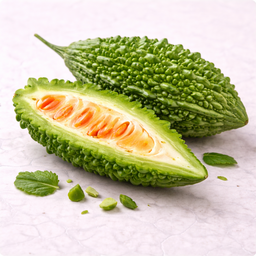
Bitter Melon
Scientifically Supported Blood Sugar Aid
What is this ingredient?
Bitter melon is one of the most researched plants in relation to carbohydrate metabolism, with dozens of clinical studies.
## Three Active Mechanisms
Joseph & Jini (2013) in Journal of Ethnopharmacology identified three blood sugar-lowering compounds: charantin (steroid), polypeptide-p (insulin-like protein), and vicine. These work through different mechanisms simultaneously.
## Clinical Results
Fuangchan et al. (2011) in Journal of Ethnopharmacology showed that 2000mg bitter melon per day significantly lowers fasting blood sugar in type 2 diabetes patients — comparable to metformin in some studies.
## Practical Use
The bitterness can be reduced by salting before cooking. Combine with strong flavors (garlic, chili) in stir-fries.
How does it taste?
Pronouncedly bitter with a sharp, refreshing taste. Highly distinctive.
Pairs well with:
Pairs well with garlicblack bean sauceeggturmeric and coconut.
Did you know...?
- Bitter melon becomes greener and more bitter as it ripens, the opposite of most fruits.
- Bitter melon has been used in traditional Asian cuisine for over 600 years.
Nutritional Value & Energy
Per 100g
Bitter Melon is low in calories thanks to natural nutrients , buffered by fiber.
Per 100g
Minerals
Vitamins
More nutrients
Trace Minerals
What's in a serving?
1 serving
Bitter Melon naturally contains vitamin c (84 mg per 100 g).
Bitter Melon naturally contains folate (72 mcg per 100 g).
% of daily reference intake (DRI)
EU-approved nutrition claims
This ingredient contains nutrients for which EFSA-authorized health claims exist (at nutrient level, not ingredient-specific).
Approved health claims (EU)
Vitamin_c EU 432/2012
Vitamin C contributes to the normal function of the immune system
Contains 84mg/100g (threshold: ≥12mg/100g)
Vitamin_c EU 432/2012
Vitamin C contributes to the reduction of tiredness and fatigue
Contains 84mg/100g (threshold: ≥12mg/100g)
Vitamin_c EU 432/2012
Vitamin C contributes to normal collagen formation for the normal function of skin
Contains 84mg/100g (threshold: ≥12mg/100g)
Folate EU 432/2012
Folate contributes to normal blood formation
Contains 72mcg/100g (threshold: ≥30mcg/100g)
Folate EU 432/2012
Folate contributes to normal amino acid synthesis
Contains 72mcg/100g (threshold: ≥30mcg/100g)
Folate EU 432/2012
Folate contributes to normal homocysteine metabolism
Contains 72mcg/100g (threshold: ≥30mcg/100g)
Folate EU 432/2012
Folate contributes to normal psychological function
Contains 72mcg/100g (threshold: ≥30mcg/100g)
Folate EU 432/2012
Folate contributes to the normal function of the immune system
Contains 72mcg/100g (threshold: ≥30mcg/100g)
Folate EU 432/2012
Folate has a role in the process of cell division
Contains 72mcg/100g (threshold: ≥30mcg/100g)
Folate EU 432/2012
Folate contributes to maternal tissue growth during pregnancy
Contains 72mcg/100g (threshold: ≥30mcg/100g)
Vitamin_c EU 432/2012
Vitamin C contributes to normal collagen formation for the normal function of blood vessels
Contains 84mg/100g (threshold: ≥12mg/100g)
Vitamin_c EU 432/2012
Vitamin C contributes to normal collagen formation for the normal function of bones
Contains 84mg/100g (threshold: ≥12mg/100g)
Vitamin_c EU 432/2012
Vitamin C contributes to normal collagen formation for the normal function of cartilage
Contains 84mg/100g (threshold: ≥12mg/100g)
Vitamin_c EU 432/2012
Vitamin C contributes to normal collagen formation for the normal function of gums
Contains 84mg/100g (threshold: ≥12mg/100g)
Vitamin_c EU 432/2012
Vitamin C contributes to normal collagen formation for the normal function of teeth
Contains 84mg/100g (threshold: ≥12mg/100g)
Vitamin_c EU 432/2012
Vitamin C contributes to normal energy-yielding metabolism
Contains 84mg/100g (threshold: ≥12mg/100g)
Vitamin_c EU 432/2012
Vitamin C contributes to normal functioning of the nervous system
Contains 84mg/100g (threshold: ≥12mg/100g)
Vitamin_c EU 432/2012
Vitamin C contributes to normal psychological function
Contains 84mg/100g (threshold: ≥12mg/100g)
Vitamin_c EU 432/2012
Vitamin C contributes to the protection of cells from oxidative stress
Contains 84mg/100g (threshold: ≥12mg/100g)
Vitamin_c EU 432/2012
Vitamin C contributes to the regeneration of the reduced form of vitamin E
Contains 84mg/100g (threshold: ≥12mg/100g)
Vitamin_c EU 432/2012
Vitamin C increases iron absorption
Contains 84mg/100g (threshold: ≥12mg/100g)
Vitamin_c EU 432/2012
Vitamin C contributes to maintain the normal function of the immune system during and after intense physical exercise
Contains 84mg/100g (threshold: ≥12mg/100g)
Comparison
vssinaasappel
Bitter Melon contains about 2× more vitamin C per 100g than orange.
What's being researched?
Charantin and interaction with carbohydrate metabolism
Charantin and other bioactive compounds in bitter melon are being intensively studied for potential carbohydrate metabolism-related effects. Multiple clinical studies show promising results, but standardization of extracts remains a challenge.
Supported by: [2] Fuangchan A (2011) , [1] Kim SK (2020) , [3] Krawinkel MB (2006)
Immunomodulatory properties
Proteins in bitter melon are being researched for potential immunomodulatory effects. Preclinical evidence is promising, but human research is in an early stage.
Supported by: [1] Kim SK (2020)
Good Combinations (Synergy)
Combine bitter melon smartly to enhance the effect:
Bitter Melon 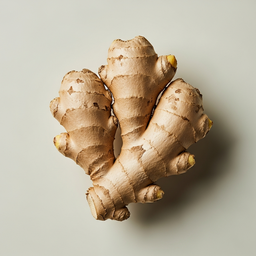 Ginger
 Double enzymatic digestive support
Technical: Bitter melon activates gastric acid and bile release via bitter taste receptors (T2R). Ginger's gingerols act as 5-HT3 receptor antagonists and accelerate gastric emptying. Together they optimize digestion: bitter melon stimulates secretion, ginger promotes motility.
What does this mean for you? Add ginger to bitter melon dishes. Ginger reduces any nausea from the bitter taste while speeding up digestion. A smart Asian combination that has been used for centuries.
Bitter Melon 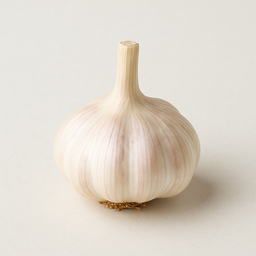 Garlic
 Double glycemic modulation via AMPK and GLUT4 pathways
Technical: Bitter melon's charantin activates AMPK and increases GLUT4 translocation, influencing cellular glucose uptake. Garlic's allicin and S-allylcysteine modulate glycemic response via insulin receptor signaling. Together they influence glycemic response through two independent routes: AMPK/GLUT4 modulation and insulin receptor signaling.
What does this mean for you? Stir-fry bitter melon with garlic — a classic Asian combination. Two bioactive compounds each influencing glycemic response through their own pathway. Garlic also mellows the bitter taste.
Bitter Melon  Turmeric
 Charantin + curcumin: double AMPK activation
Technical: Bitter melon contains charantin that activates AMPK and stimulates GLUT4 translocation to the cell surface. Curcumin from turmeric modulates TNF-α and NF-κB signaling. Together they influence glucose metabolism via two independent routes: direct GLUT4 activation and NF-κB modulation.
What does this mean for you? Combine bitter melon with turmeric in a curry or stir-fry. Two bioactive compounds each influencing glucose metabolism through their own pathway. Always add black pepper for better curcumin absorption.
Recipes with Bitter Melon
Discover delicious recipes featuring bitter melon:
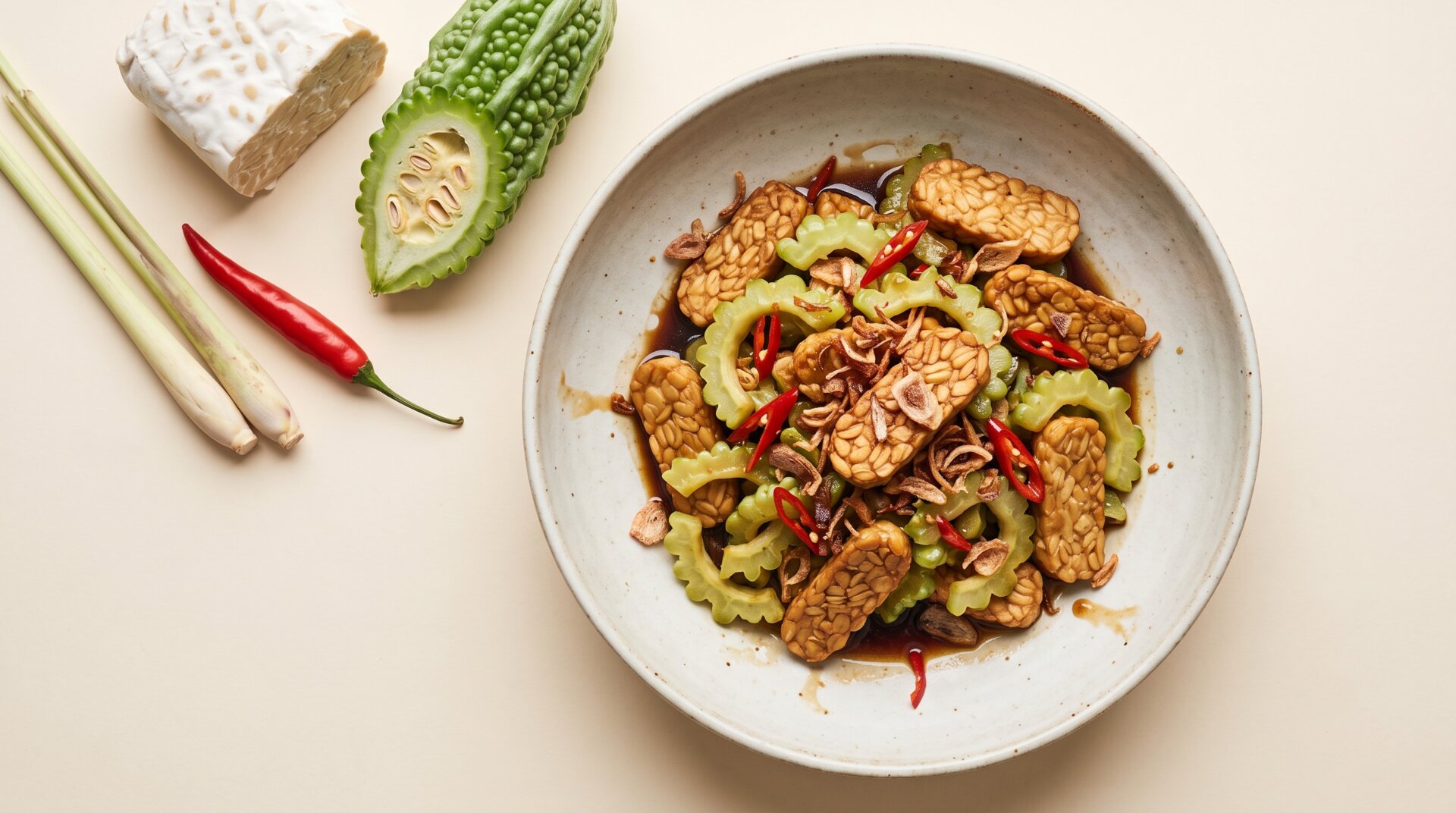 Indonesian Tempeh with Bitter Melon 45 min Stir-fry with kecap manis, galangal and lemongrass
  320 kcal
  18g protein 2 synergies
  In the Kitchen
Storage
Location:Refrigerator
Shelf life:1 week
Preparation
Salting reduces bitterness. Stir-fry or braise.
Conversions
Substitutes
Smart preparation
1Remove the seeds and white pith to reduce bitterness.
2Sprinkle slices with salt and rest for 15 minutes before cooking.
Why?
Salt draws out some of the bitter compounds.
3Choose light green specimens for less bitterness.
Caution / Warnings
Bitter Melon is very safe, but there are scientific considerations:
Diabetes Medication Moderate
May enhance blood sugar lowering effect
Advice:
Consult doctor when using diabetes medication
Pregnancy Severe
May stimulate uterine contractions
Advice:
Avoid during pregnancy
G6PD Deficiency Moderate
Vicine may cause hemolysis in sensitive individuals
Traditional use
Ayurveda
Ayurvedic blood purifier
In Ayurveda, bitter melon (karela) has been used for centuries as a blood purifier and for digestive issues. It is considered a Pitta-balancing food.
Traditional Chinese Medicine
Chinese cooling tonic
In traditional Chinese medicine, bitter melon is prescribed to dispel internal heat and support the liver.
Southeast Asian
Southeast Asian traditional use
In Filipino and Indonesian folk medicine, bitter melon is traditionally consumed as tea for fever and as a general strengthening remedy.
Summary
Bitter melon is one of the most researched plants for blood sugar — charantin and polypeptide-p work like plant insulin. Salting before cooking reduces bitterness. Watch for interactions with diabetes medication.