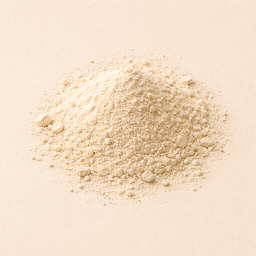
Baobab Powder
African fruit powder with high vitamin C and fiber
What is this ingredient?
The baobab (Adansonia digitata), also called the 'Tree of Life', is an iconic tree of the African savanna that can live for up to 3000 years. The fruit pulp is naturally dry inside the fruit and is ground into a white to cream-colored powder with a subtle citrusy, slightly tart taste. This fruit pulp has been used for centuries in African kitchens in drinks, porridges, sauces, and simple everyday preparations.
## Nutrition profile
Baobab powder is rich in vitamin C: according to Chadare et al. (2009), 40 grams provides about 84-100% of the recommended daily intake for adults. Baobab therefore contains vitamin C, which contributes to the normal function of the immune system and to normal collagen formation. It also contains a high amount of dietary fiber and minerals such as potassium (2270 mg per 100 g), calcium, magnesium, iron, and zinc.
## Polyphenols and plant compounds
Baobab contains several plant compounds, including phenols, flavonoids, proanthocyanidins, tannins, catechins, and carotenoids (Silva et al., 2023). In nutrition research, these compounds are mainly studied as part of the fruit's broader polyphenol profile. Cloudy, fiber-rich fruit powder keeps more of the natural food matrix than a filtered drink or extract.
## Fiber and fermentation research
The fruit pulp contains plenty of pectin and other fiber fractions. In vitro fermentation studies with baobab powder describe acidification in a colon model and production of short-chain fatty acids such as acetate, propionate, and butyrate, comparable to reference fibers such as inulin (Foltz et al., 2021). This type of research mainly describes what happens in a laboratory model and helps clarify the fiber profile of baobab.
## Culinary application
Baobab powder has a naturally citrusy flavor with hints of pear, vanilla, and grapefruit. It dissolves easily in liquids and can be added directly to smoothies, yogurt, oatmeal, breakfast cereals, energy balls, dressings, and baked goods. Because of its high fiber content, it can absorb moisture; when using it in batter or dough, add a little extra liquid and start with small amounts.
## Sustainability and ethics
Baobab is usually harvested by collecting naturally fallen fruits, leaving the tree intact. The baobab trade can support local communities in Africa, especially women involved in collecting, drying, and processing. Prefer products with clear origin information, a transparent supply chain, and fair collaboration with producers.
How does it taste?
Tart-sour with a citrusy tang and slightly powdery texture.
Pairs well with:
Pairs well with smoothiesyoghurtmangobanana and coconut.
Did you know...?
- The baobab is called the 'tree of life' and can live up to 6,000 years.
- Baobab fruits dry naturally on the tree and are not dried separately.
Nutritional Value & Energy
Per 100g
Baobab Powder provides energy thanks to natural nutrients , buffered by fiber.
Per 100g
Minerals
Vitamins
Omega-3 fatty acids
What's in a serving?
1 serving
Baobab Powder naturally contains vitamin c (280 mg per 100 g).
Baobab Powder naturally contains calcium (293 mg per 100 g).
Baobab Powder naturally contains potassium (2270 mg per 100 g).
Baobab Powder naturally contains iron (9.3 mg per 100 g).
Baobab Powder naturally contains magnesium (148 mg per 100 g).
Baobab Powder naturally contains folate (38 mcg per 100 g).
% of daily reference intake (DRI)
EU-approved nutrition claims
This ingredient contains nutrients for which EFSA-authorized health claims exist (at nutrient level, not ingredient-specific).
Approved health claims (EU)
Vitamin_c EU 432/2012
Vitamin C contributes to the normal function of the immune system
Contains 280mg/100g (threshold: ≥12mg/100g)
Vitamin_c EU 432/2012
Vitamin C contributes to the reduction of tiredness and fatigue
Contains 280mg/100g (threshold: ≥12mg/100g)
Vitamin_c EU 432/2012
Vitamin C contributes to normal collagen formation for the normal function of skin
Contains 280mg/100g (threshold: ≥12mg/100g)
Magnesium EU 432/2012
Magnesium contributes to normal muscle function
Contains 148mg/100g (threshold: ≥56.25mg/100g)
Magnesium EU 432/2012
Magnesium contributes to the reduction of tiredness and fatigue
Contains 148mg/100g (threshold: ≥56.25mg/100g)
Magnesium EU 432/2012
Magnesium contributes to normal functioning of the nervous system
Contains 148mg/100g (threshold: ≥56.25mg/100g)
Iron EU 432/2012
Iron contributes to normal energy-yielding metabolism
Contains 9.3mg/100g (threshold: ≥2.1mg/100g)
Iron EU 432/2012
Iron contributes to the reduction of tiredness and fatigue
Contains 9.3mg/100g (threshold: ≥2.1mg/100g)
Calcium EU 432/2012
Calcium is needed for the maintenance of normal bones
Contains 293mg/100g (threshold: ≥120mg/100g)
Potassium EU 432/2012
Potassium contributes to the maintenance of normal blood pressure
Contains 2270mg/100g (threshold: ≥300mg/100g)
Folate EU 432/2012
Folate contributes to normal blood formation
Contains 38mcg/100g (threshold: ≥30mcg/100g)
Folate EU 432/2012
Folate contributes to normal amino acid synthesis
Contains 38mcg/100g (threshold: ≥30mcg/100g)
Folate EU 432/2012
Folate contributes to normal homocysteine metabolism
Contains 38mcg/100g (threshold: ≥30mcg/100g)
Folate EU 432/2012
Folate contributes to normal psychological function
Contains 38mcg/100g (threshold: ≥30mcg/100g)
Folate EU 432/2012
Folate contributes to the normal function of the immune system
Contains 38mcg/100g (threshold: ≥30mcg/100g)
Folate EU 432/2012
Folate has a role in the process of cell division
Contains 38mcg/100g (threshold: ≥30mcg/100g)
Folate EU 432/2012
Folate contributes to maternal tissue growth during pregnancy
Contains 38mcg/100g (threshold: ≥30mcg/100g)
Vitamin_c EU 432/2012
Vitamin C contributes to normal collagen formation for the normal function of blood vessels
Contains 280mg/100g (threshold: ≥12mg/100g)
Vitamin_c EU 432/2012
Vitamin C contributes to normal collagen formation for the normal function of bones
Contains 280mg/100g (threshold: ≥12mg/100g)
Vitamin_c EU 432/2012
Vitamin C contributes to normal collagen formation for the normal function of cartilage
Contains 280mg/100g (threshold: ≥12mg/100g)
Vitamin_c EU 432/2012
Vitamin C contributes to normal collagen formation for the normal function of gums
Contains 280mg/100g (threshold: ≥12mg/100g)
Vitamin_c EU 432/2012
Vitamin C contributes to normal collagen formation for the normal function of teeth
Contains 280mg/100g (threshold: ≥12mg/100g)
Vitamin_c EU 432/2012
Vitamin C contributes to normal energy-yielding metabolism
Contains 280mg/100g (threshold: ≥12mg/100g)
Vitamin_c EU 432/2012
Vitamin C contributes to normal functioning of the nervous system
Contains 280mg/100g (threshold: ≥12mg/100g)
Vitamin_c EU 432/2012
Vitamin C contributes to normal psychological function
Contains 280mg/100g (threshold: ≥12mg/100g)
Vitamin_c EU 432/2012
Vitamin C contributes to the protection of cells from oxidative stress
Contains 280mg/100g (threshold: ≥12mg/100g)
Vitamin_c EU 432/2012
Vitamin C contributes to the regeneration of the reduced form of vitamin E
Contains 280mg/100g (threshold: ≥12mg/100g)
Vitamin_c EU 432/2012
Vitamin C increases iron absorption
Contains 280mg/100g (threshold: ≥12mg/100g)
Vitamin_c EU 432/2012
Vitamin C contributes to maintain the normal function of the immune system during and after intense physical exercise
Contains 280mg/100g (threshold: ≥12mg/100g)
Calcium EU 432/2012
Calcium is needed for the maintenance of normal teeth
Contains 293mg/100g (threshold: ≥120mg/100g)
Calcium EU 432/2012
Calcium contributes to normal blood clotting
Contains 293mg/100g (threshold: ≥120mg/100g)
Calcium EU 432/2012
Calcium contributes to normal energy-yielding metabolism
Contains 293mg/100g (threshold: ≥120mg/100g)
Calcium EU 432/2012
Calcium contributes to normal muscle function
Contains 293mg/100g (threshold: ≥120mg/100g)
Calcium EU 432/2012
Calcium contributes to normal neurotransmission
Contains 293mg/100g (threshold: ≥120mg/100g)
Calcium EU 432/2012
Calcium contributes to the normal function of digestive enzymes
Contains 293mg/100g (threshold: ≥120mg/100g)
Calcium EU 432/2012
Calcium has a role in the process of cell division and specialisation
Contains 293mg/100g (threshold: ≥120mg/100g)
Magnesium EU 432/2012
Magnesium contributes to normal energy-yielding metabolism
Contains 148mg/100g (threshold: ≥56.25mg/100g)
Magnesium EU 432/2012
Magnesium contributes to electrolyte balance
Contains 148mg/100g (threshold: ≥56.25mg/100g)
Magnesium EU 432/2012
Magnesium contributes to normal protein synthesis
Contains 148mg/100g (threshold: ≥56.25mg/100g)
Magnesium EU 432/2012
Magnesium contributes to normal psychological function
Contains 148mg/100g (threshold: ≥56.25mg/100g)
Magnesium EU 432/2012
Magnesium contributes to the maintenance of normal bones
Contains 148mg/100g (threshold: ≥56.25mg/100g)
Magnesium EU 432/2012
Magnesium contributes to the maintenance of normal teeth
Contains 148mg/100g (threshold: ≥56.25mg/100g)
Magnesium EU 432/2012
Magnesium has a role in the process of cell division
Contains 148mg/100g (threshold: ≥56.25mg/100g)
Iron EU 432/2012
Iron contributes to normal cognitive function
Contains 9.3mg/100g (threshold: ≥2.1mg/100g)
Iron EU 432/2012
Iron contributes to normal formation of red blood cells and haemoglobin
Contains 9.3mg/100g (threshold: ≥2.1mg/100g)
Iron EU 432/2012
Iron contributes to normal oxygen transport in the body
Contains 9.3mg/100g (threshold: ≥2.1mg/100g)
Iron EU 432/2012
Iron contributes to the normal function of the immune system
Contains 9.3mg/100g (threshold: ≥2.1mg/100g)
Iron EU 432/2012
Iron has a role in the process of cell division
Contains 9.3mg/100g (threshold: ≥2.1mg/100g)
Potassium EU 432/2012
Potassium contributes to normal functioning of the nervous system
Contains 2270mg/100g (threshold: ≥300mg/100g)
Potassium EU 432/2012
Potassium contributes to normal muscle function
Contains 2270mg/100g (threshold: ≥300mg/100g)
Comparison
vsbanaan
Baobab Powder contains about 6× more potassium per 100g than banana.
vssinaasappel
Baobab Powder contains about 5× more vitamin C per 100g than orange.
vsspinazie
Baobab Powder contains about 3× more iron per 100g than spinach.
What's being researched?
Baobab as fiber-rich fruit powder
Baobab fruit pulp is rich in vitamin C, fiber, and polyphenols. Research focuses on composition, polyphenol profile, and use in food products.
Supported by: [3] Coe (2013) , [4] Multiple authors (2021) , [1] Chadare (2009) , [2] Silva (2023)
Baobab, fiber, and starch-rich meals
Baobab is studied for its high fiber content and polyphenols in combination with starch-rich meals. The literature describes measurements related to starch digestion and meal response.
Supported by: [3] Coe (2013) , [2] Silva (2023)
Good Combinations (Synergy)
Combine baobab powder smartly to enhance the effect:
Baobab Powder 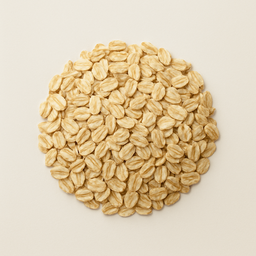 Oatmeal
 Vitamin C from baobab increases non-heme iron absorption from oats 2-6x
Ascorbic acid increases non-heme iron absorption from grains 2-6x via phytate chelation (PMID: 15743017)
Technical: Oats contain 4.7mg non-heme iron per 100g, but phytate (1.0-1.4g/100g) binds up to 70% of it. Baobab powder contains 150-500mg vitamin C per 100g — one of the highest natural sources. Ascorbic acid reduces Fe³⁺→Fe²⁺ and forms soluble iron-ascorbate complexes bypassing phytate binding, increasing iron absorption from 2-5% to 10-20%.
What does this mean for you? Mix a teaspoon of baobab powder into your oatmeal. The extreme vitamin C breaks through the phytate blockade so you extract up to 6x more iron from your breakfast.
Baobab Powder 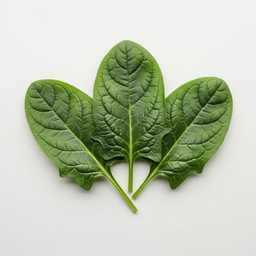 Spinach
 Extremely high vitamin C increases iron absorption from spinach 2-6x
Ascorbic acid increases non-heme iron absorption 2-6x via Fe³⁺→Fe²⁺ reduction (PMID: 15743017)
Technical: Baobab powder contains 280mg vitamin C per 100g, one of the highest natural sources worldwide. This vitamin C reduces Fe³⁺ to Fe²⁺, improving non-heme iron absorption from spinach (2.7mg/100g) up to 6x via DMT-1 transporters.
What does this mean for you? Mix baobab powder in your green smoothie with spinach. The extreme vitamin C multiplies iron absorption, crucial for vegetarians and people with iron deficiency.
Baobab Powder 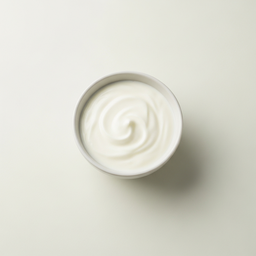 Yogurt
 Synbiotic effect: prebiotic pectin + probiotic bacteria
Baobab pectin is prebiotic and stimulates Lactobacillus fermentation to SCFA
Technical: Baobab contains 50% fiber with the majority being pectin, a soluble fiber working prebiotically. Lactobacillus from yogurt (probiotic) ferments this pectin into short-chain fatty acids. Together they form a synbiotic combination strengthening gut flora.
What does this mean for you? Baobab powder in yogurt is a perfect synbiotic breakfast. The prebiotic fibers feed the probiotics from yogurt, supporting your microbiome optimally.
Recipes with Baobab Powder
Discover delicious recipes featuring baobab powder:
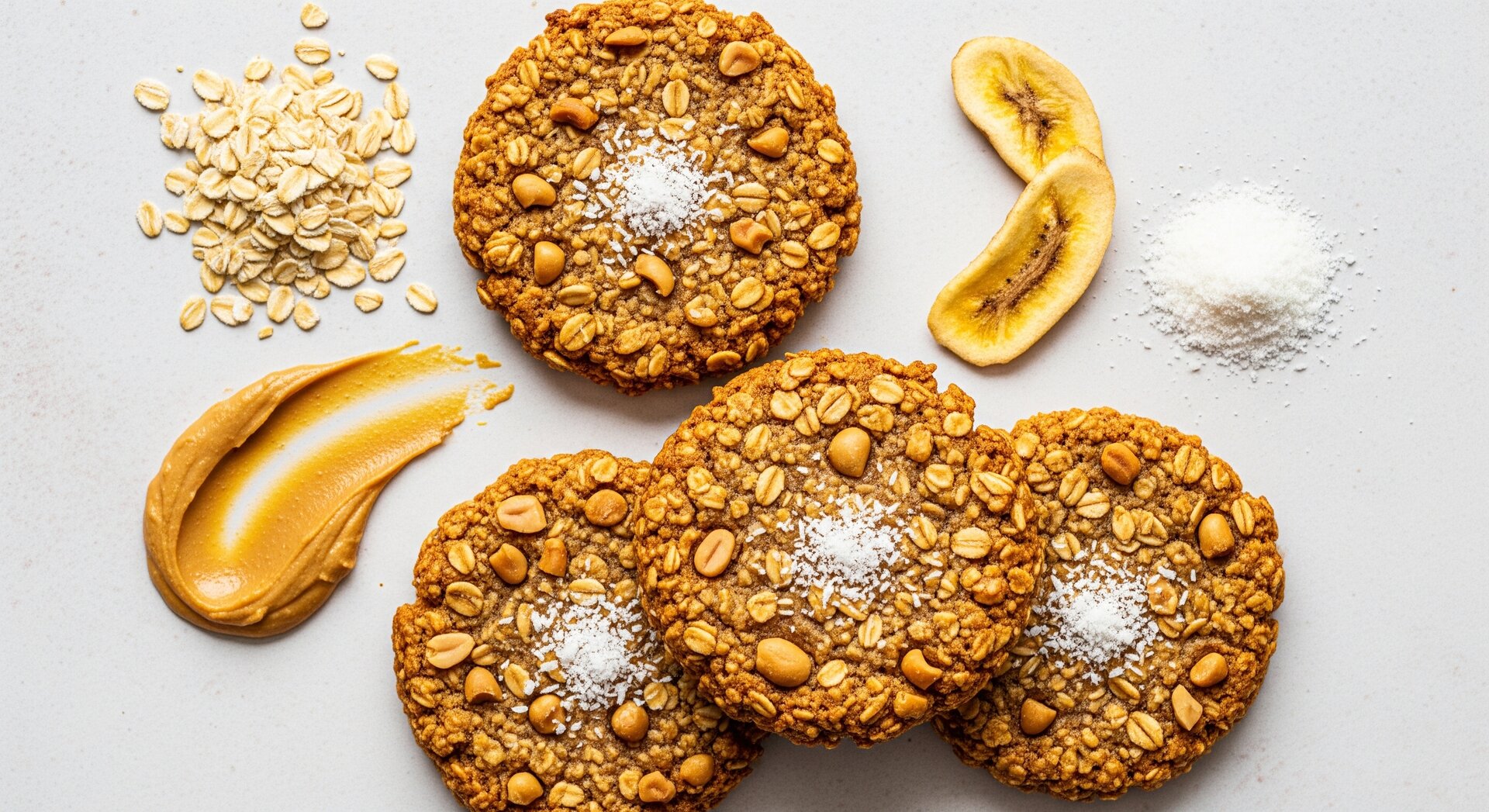 West African Oat Cake with Baobab and Peanut 30 min Hearty breakfast cake with peanut butter, coconut and baobab
  557 kcal
  17g protein 1 synergies
  In the Kitchen
Storage
Location:Pantry
Shelf life:2-3 jaar in droge, koele omstandigheden
Store baobab powder in an airtight container in a cool, dry place away from direct sunlight. The powder may clump in moisture but is still safe to use. For long-term storage, refrigeration is possible but not necessary.
Preparation
Baobab powder does not need to be cooked and can be used directly. Stir 1-2 teaspoons into smoothies, yogurt, or oatmeal. For beverages: dissolve 1 tablespoon in 250ml water or plant milk. Can also be added to baking (replace up to 10% flour), but add extra moisture due to high fiber content.
Substitutes
Smart preparation
1Mix baobab powder into smoothies, juices, or yogurt.
Why?
The citrusy, slightly tart flavor pairs well with fruity preparations.
2First dissolve baobab powder in a small amount of water to prevent lumps.
3Use 1-2 teaspoons per serving; more can give a chalky mouthfeel.
Caution / Warnings
Baobab Powder is very safe, but there are scientific considerations:
Blood thinners and high vitamin C Moderate
The extremely high vitamin C concentration may interact with anticoagulants (blood thinners)
Advice:
Consult your doctor before using large amounts of baobab with blood thinners like warfarin. Start with small amounts (1-2 teaspoons per day)
Kidney stones and high oxalate content Moderate
People with a history of calcium oxalate kidney stones should be cautious with baobab
Advice:
Limit intake to 1-2 teaspoons per day and drink plenty of water. Consult a nephrologist for existing kidney problems
Rare allergic reactions Mild
Although rare, some people may be allergic to baobab
Advice:
Test with a small amount (half teaspoon) on first use. Stop if rash, itching, or digestive problems occur
Traditional use
African
Baobab in African Tradition
The baobab is called the 'tree of life' in Africa. The fruit pulp has been used for centuries as food and drink.
Summary
Baobab powder is dried African fruit pulp with 280 mg vitamin C per 100 g and 50% fiber. The 'Tree of Life' provides vitamin C, which contributes to the normal function of the immune system and to normal collagen formation for the normal function of the skin.