Allspice
Warming spice with complex flavors of cinnamon, nutmeg and clove
What is this ingredient?
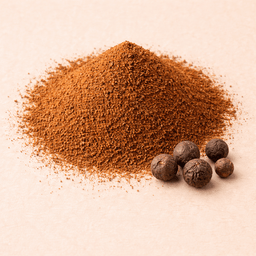
Allspice powder is a remarkably versatile spice that is central to Caribbean cuisine and valued worldwide for its complex flavor profile. The dried berries contain 60-90% eugenol in their essential oil, a powerful bioactive compound frequently studied in scientific research. In addition to eugenol, allspice contains quercetin, gallic acid, and various polyphenols. Traditionally, the spice is used to support digestion and as a natural preservative. Its warm, aromatic character makes it suitable for both sweet applications like apple pie and gingerbread, and savory dishes like jerk chicken and stews. The berries are picked when still green and unripe, then sun-dried until they develop their characteristic brown color and intense aroma.
How does it taste?
Warm and complex with cinnamon, nutmeg and clove tones.
Pairs well with:
Pairs well with jerk marinadespumpkinchocolatebanana and rum.
Did you know...?
- Allspice got its English name because it tastes like a mix of cinnamon, nutmeg, and clove.
- Allspice grows almost exclusively in Jamaica and the Caribbean region.
Nutritional Value & Energy
Per 100g
Allspice provides energy thanks to natural nutrients , buffered by fiber.
Per 100g
Minerals
Vitamins
Omega-3 fatty acids
More nutrients
Trace Minerals
What's in a serving?
Allspice naturally contains manganese (2.943 mg per 100 g dried powder). At typical spice usage (3–9 g), the contribution is limited.
Allspice naturally contains iron (7.06 mg per 100 g dried powder). At typical spice usage (3–9 g), the contribution is limited.
Allspice naturally contains potassium (1044 mg per 100 g dried powder). At typical spice usage (3–9 g), the contribution is limited.
Allspice naturally contains magnesium (135 mg per 100 g dried powder). At typical spice usage (3–9 g), the contribution is limited.
Allspice naturally contains calcium (661 mg per 100 g dried powder). At typical spice usage (3–9 g), the contribution is limited.
Allspice naturally contains vitamin c (39.2 mg per 100 g dried powder). At typical spice usage (3–9 g), the contribution is limited.
Allspice naturally contains manganese (2.943 mg per 100 g dried powder). At typical spice usage (3–9 g), the contribution is limited.
% of daily reference intake (DRI)
EU-approved nutrition claims
There are currently no EFSA-authorized health claims specific for Allspice. Various applications for herbs and spices have been submitted but not yet assessed (botanical 'on hold' list).
Comparison
vsmelk
Allspice contains about 5× more calcium per 100g than milk — but you use much less allspice per serving.
vsspinazie
Allspice contains about 3× more iron per 100g than spinach — but you use much less allspice per serving.
vsbanaan
Allspice contains about 3× more potassium per 100g than banana — but you use much less allspice per serving.
What's being researched?
Eugenol in allspice
Allspice contains eugenol, studied for antioxidant and analgesic properties. Research is limited but promising.
Supported by: [2] Kikuzaki H (2011) , [5] Al-Kalaldeh JZ (2015) , [4] Marzouk MSA (2005)
Recipes with Allspice
Discover delicious recipes featuring allspice:
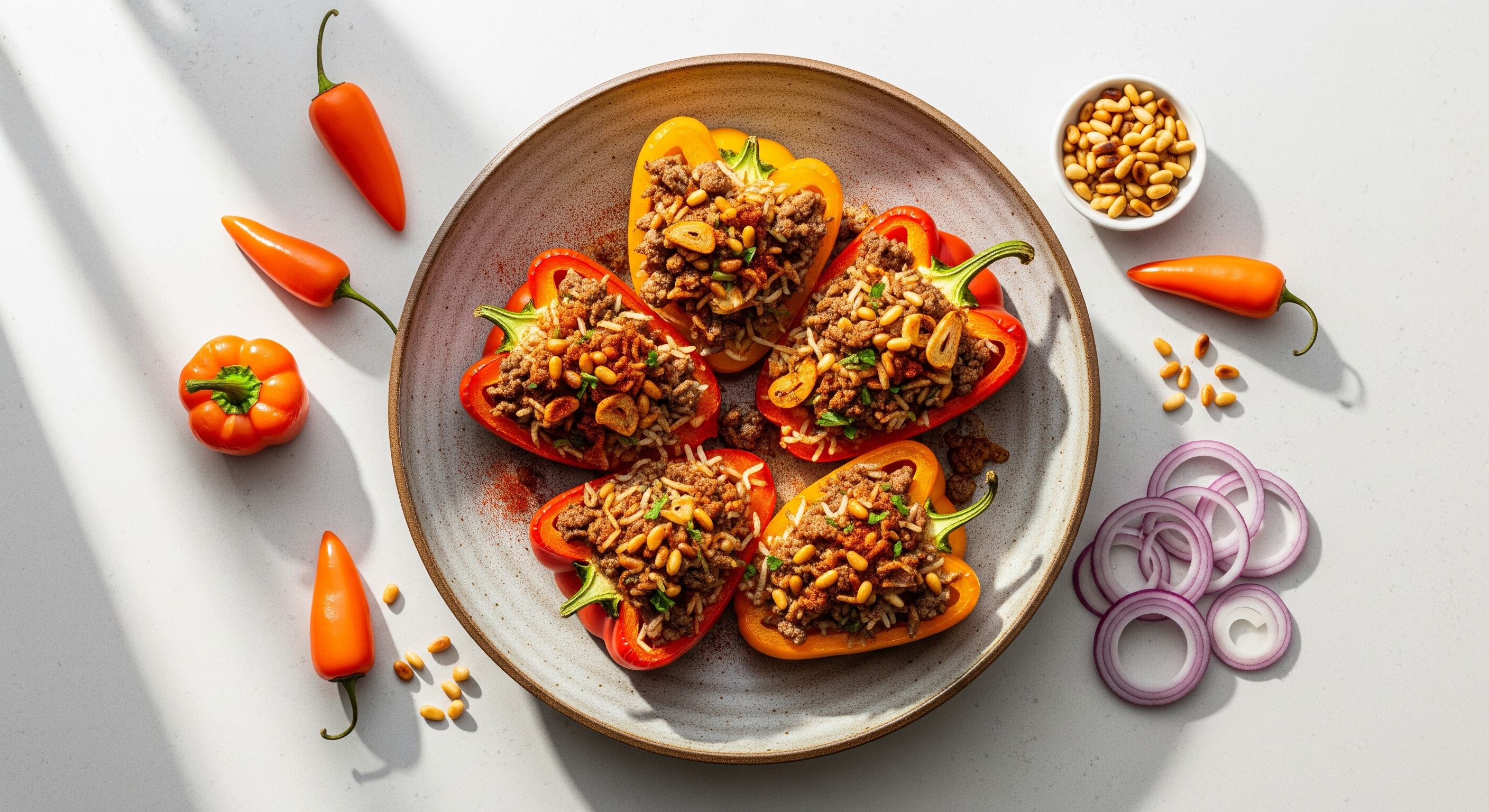 Stuffed Bell Peppers with Lamb, Rice & Pine Nuts 60 min Levantine stuffed peppers with spiced lamb filling
  738 kcal
  33g protein 2 synergies
  Middle Eastern Kibbeh with Bulgur and Yogurt Sauce 70 min Spiced bulgur-lamb patties with pine nuts, mint and fresh tahini-yogurt sauce 695 kcal 35g protein 3 synergies
  In the Kitchen
Storage
Location:Pantry
Shelf life:2-3 jaar in gesloten verpakking, 6-12 maanden na opening
Store in an airtight container in a cool, dark place. Ground allspice loses aroma faster than whole berries, so buy smaller quantities. For maximum flavor: grind whole allspice berries just before use.
Preparation
Add to stews, marinades, baked goods, and desserts. For slow cooking, add early for deeper flavor; for quick preparations, add at the end. For optimal aroma development: dry roast briefly in a pan before adding.
Conversions
Substitutes
Smart preparation
1Use allspice sparingly; it combines flavors of cinnamon, cloves, and nutmeg.
2Grind whole allspice berries fresh for the most aroma.
Why?
Pre-ground allspice quickly loses its complex flavor profile.
3Add allspice early to stews and marinades.
Caution / Warnings
Allspice is very safe, but there are scientific considerations:
Blood thinners (anticoagulants) Moderate
Eugenol may affect blood clotting and enhance the effect of anticoagulants like warfarin
Advice:
Consult your doctor when using blood thinners. Limit intake to culinary amounts (< 1 teaspoon per day)
Sensitive skin / allergies Mild
High concentrations of eugenol may cause skin irritation with topical application or in case of hypersensitivity
Advice:
Avoid direct skin contact with pure allspice powder. Use cautiously if hypersensitive to cloves (also eugenol-rich)
Pregnancy (high doses) Moderate
Eugenol in very high doses may have uterine-stimulating effects, although culinary amounts are safe
Advice:
Use normal culinary amounts during pregnancy. Avoid supplements with concentrated allspice extract
Traditional use
Indigenous
Jamaican allspice among the Taíno
Allspice was used by the Taíno peoples of Jamaica and Central America to season and preserve meat, a tradition that formed the basis for later jerk seasoning.
Summary
Allspice powder is a warm, aromatic spice from Jamaica that tastes like a combination of cinnamon, nutmeg, and clove. It is rich in eugenol (60-90%), a bioactive compound frequently featured in scientific research. It also contains quercetin and gallic acid. Traditionally used in cooking and as a natural preservative. Use caution with blood thinners due to possible interaction with eugenol.