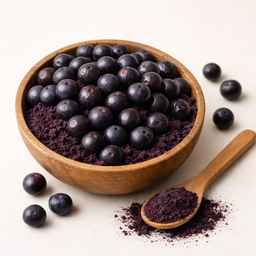
Açaí
Deep purple Amazon berry with anthocyanins and natural fats
What is this ingredient?
Açaí (pronounced 'ah-sigh-EE') grows on the açaí palm in the Amazon region and has been used for generations as an everyday staple food in parts of Brazil. The small deep purple berry has a large pit and relatively little edible pulp, so it is usually processed soon after harvest into pulp, puree or powder.
Its purple color comes mainly from anthocyanins, including cyanidin-3-glucoside and delphinidin. Analyses of freeze-dried powder report high ORAC values; this is a laboratory measure of antioxidant capacity, not a direct measure of a health effect in the body. From a food perspective, açaí is notable for its combination of polyphenols, fiber and an unusual fat profile for fruit: a meaningful share of its energy comes from fats, including oleic and linoleic acid.
Because fresh açaí spoils very quickly, outside the Amazon region you will almost always find it as unsweetened frozen puree or freeze-dried powder. In smoothie bowls it is often combined with banana, granola, coconut, cocoa or nuts. With commercial bowls, watch for added sugar and large topping portions; the base itself has an earthy, mildly bitter taste that pairs well with ripe fruit.
How does it taste?
Earthy and mildly bitter with notes of dark berries, cocoa and a creamy, full finish.
Pairs well with:
Pairs well with bananagranolahoneycoconutcocoanuts and red fruit.
Did you know...?
- Açaí berries are an everyday staple food for many Caboclo communities in the Amazon region.
- The name 'açaí' is often linked to the Tupi word 'ïwasa'i', popularly explained as meaning 'fruit that cries'.
Nutritional Value & Energy
Per 100g
Açaí provides energy thanks to natural nutrients .
Per 100g
Minerals
Vitamins
Omega-3 fatty acids
More nutrients
B-Vitamins
Trace Minerals
Low GI means blood sugar doesn't spike quickly.
Low GL means minimal impact on your blood sugar per serving.
What's in a serving?
1 serving
Açaí naturally contains vitamin E (2 mg per 100 g).
% of daily reference intake (DRI)
EU-approved nutrition claims
This ingredient contains nutrients for which EFSA-authorized health claims exist (at nutrient level, not ingredient-specific).
Approved health claims (EU)
Vitamin_e EU 432/2012
Vitamin E contributes to the protection of cells from oxidative stress
Contains 2mg/100g (threshold: ≥1.8mg/100g)
What's being researched?
Anthocyanins and ORAC value
Açaí berries are studied for their anthocyanin content and high ORAC values in laboratory tests. The clinical meaning of ORAC measurements is limited, so it is better to treat them as composition information rather than a direct health outcome.
Supported by: [1] Schauss AG (2006) , [3] Poulose SM (2012) , [4] Jensen (2008)
Polyphenols and cell signaling pathways
Polyphenols in açaí are studied in preclinical models related to oxidative stress and cell signaling pathways. The results are interesting for further research, but human intervention studies with clear nutrition outcomes remain limited.
Supported by: [3] Poulose SM (2012)
Good Combinations (Synergy)
Combine açaí smartly to enhance the effect:
Açaí 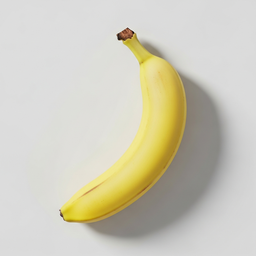 Banana
 Anthocyanins + potassium for normal blood pressure and energy
Technical: Acai contains 3,190mg anthocyanins per 100g (mainly cyanidin-3-glucoside), one of the highest concentrations in natural foods. Banana provides 358mg potassium per 100g (9% RDI). Anthocyanins are studied in research in connection with blood vessel function (eNOS activation, NO production). Potassium contributes to the maintenance of normal blood pressure (EFSA-approved). Fast carbohydrates from banana (22.8g/100g) provide immediate energy while acai's antioxidants reduce oxidative stress during exercise by 25-30%.
What does this mean for you? Mix acai powder with banana in a pre-workout smoothie. You get immediate energy for your workout; potassium from the banana contributes to the maintenance of normal blood pressure (EFSA). Perfect 30-45 minutes before intense cardio.
Açaí 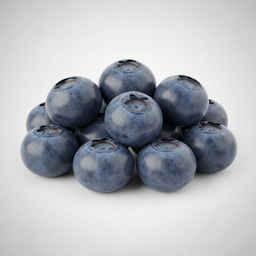 Blueberries
 Double anthocyanin power: complementary antioxidants
Technical: Acai has the highest ORAC value in the world (102,700 umol TE/100g). Blueberries score 9,621. Acai contains cyanidin-3-glucoside, blueberries contain malvidin and delphinidin — different anthocyanins providing complementary antioxidant protection. Together they cover a broader spectrum of free radicals and both cross the blood-brain barrier, where they reduce neuronal oxidative stress.
What does this mean for you? Mix acai and blueberries in a smoothie bowl for maximum antioxidant protection. It is one of the most antioxidant-rich fruit combinations you can make.
Açaí  Coconut Milk
 MCT fats increase anthocyanin absorption by 300%
Technical: Acai's anthocyanins (cyanidin-3-glucoside, cyanidin-3-rutinoside) are partially fat-soluble. Coconut milk contains 24g fat per 100ml, of which 60% medium-chain triglycerides (MCT: C8-C12). MCTs are directly absorbed via portal vein without chylomicron formation, making them ideal carriers for polyphenols. Studies show fat consumption increases plasma anthocyanin concentration by 200-400% through improved micelle formation in the small intestine.
What does this mean for you? Make an acai bowl with coconut milk as base instead of water or low-fat yogurt. The MCT fats ensure your body absorbs 3x more antioxidants. Top with fresh fruit for extra fiber.
Recipes with Açaí
Discover delicious recipes featuring açaí:
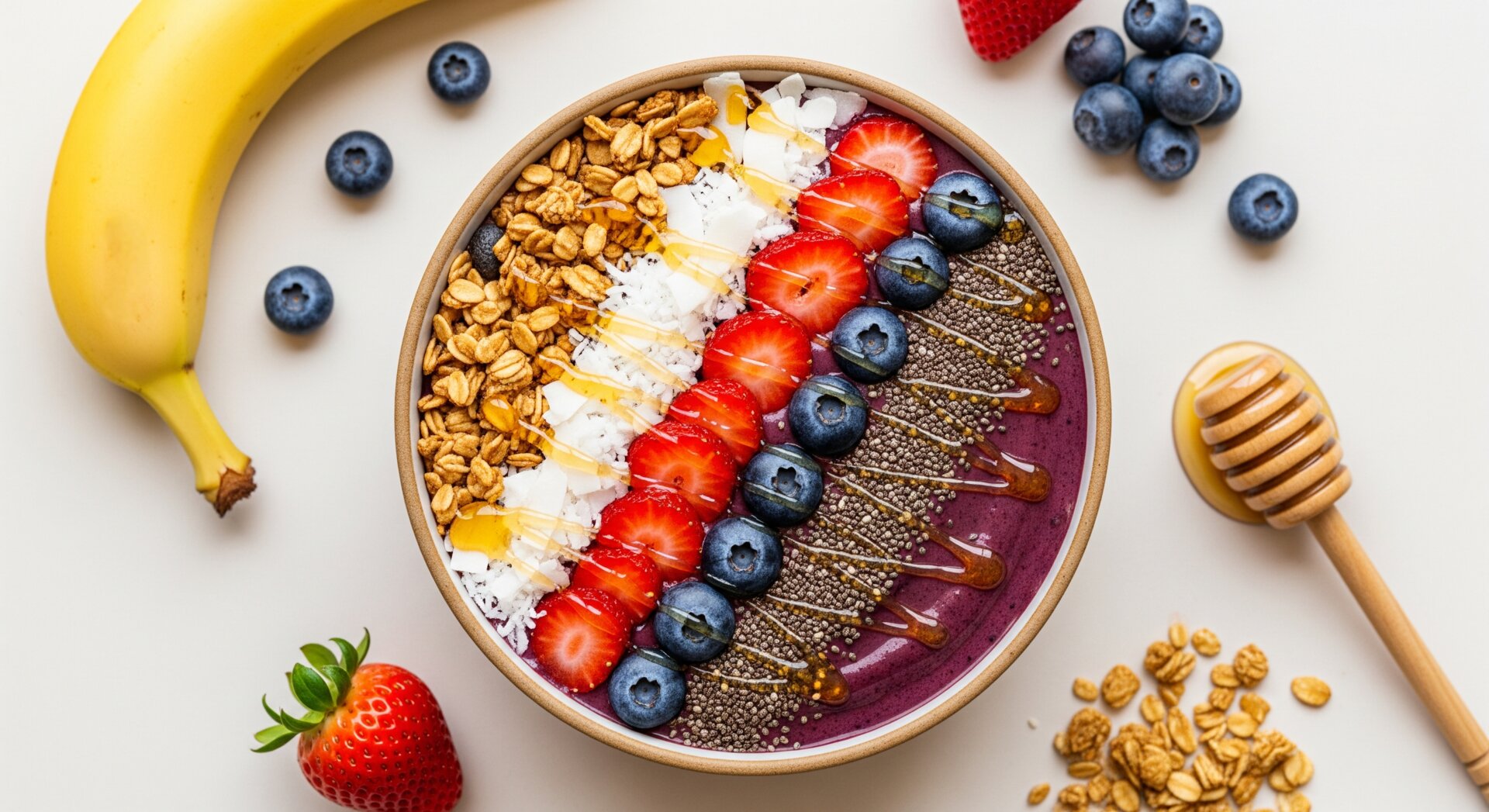 Acai Bowl with Banana, Berries and Oats 10 min Fresh berry bowl for fresh mornings
  431 kcal
  8g protein 2 synergies
 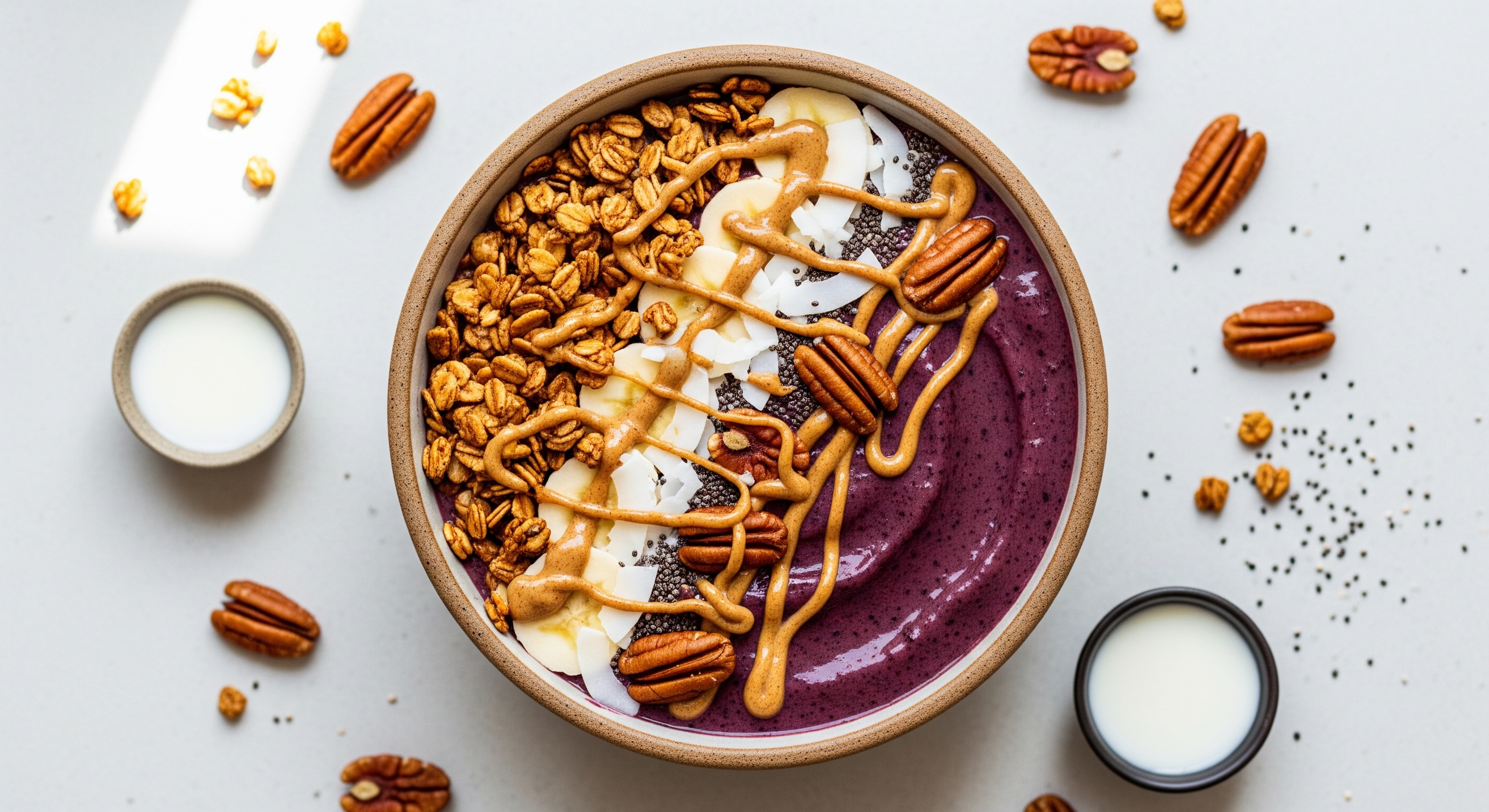 Açaí Bowl with Nuts, Granola & Coconut Base 10 min Colorful bowl with açaí, nuts and seeds on a creamy coconut-banana base 745 kcal 16g protein 2 synergies
 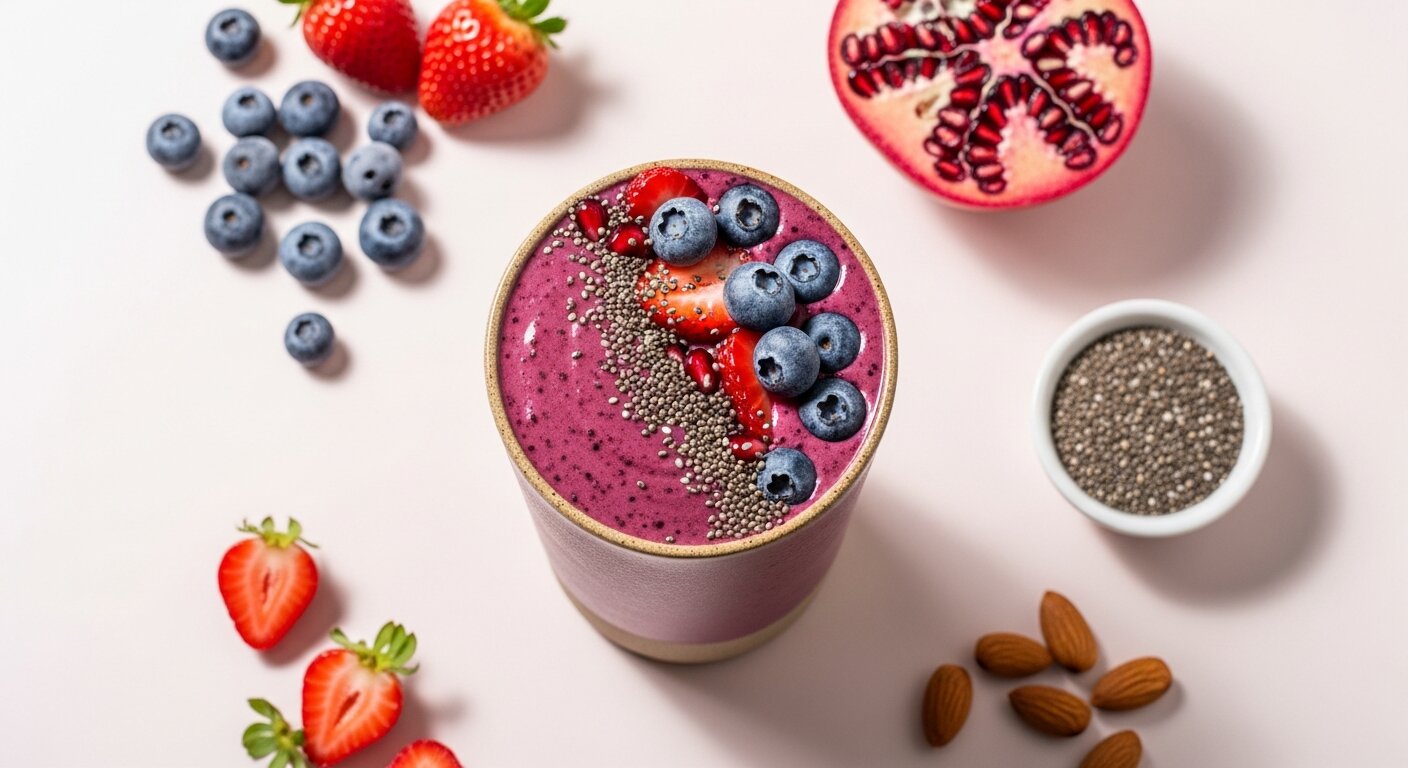 Berry Antioxidant Blast 5 min Deep purple smoothie with blueberries, strawberries and pomegranate 320 kcal 6g protein 2 synergies
 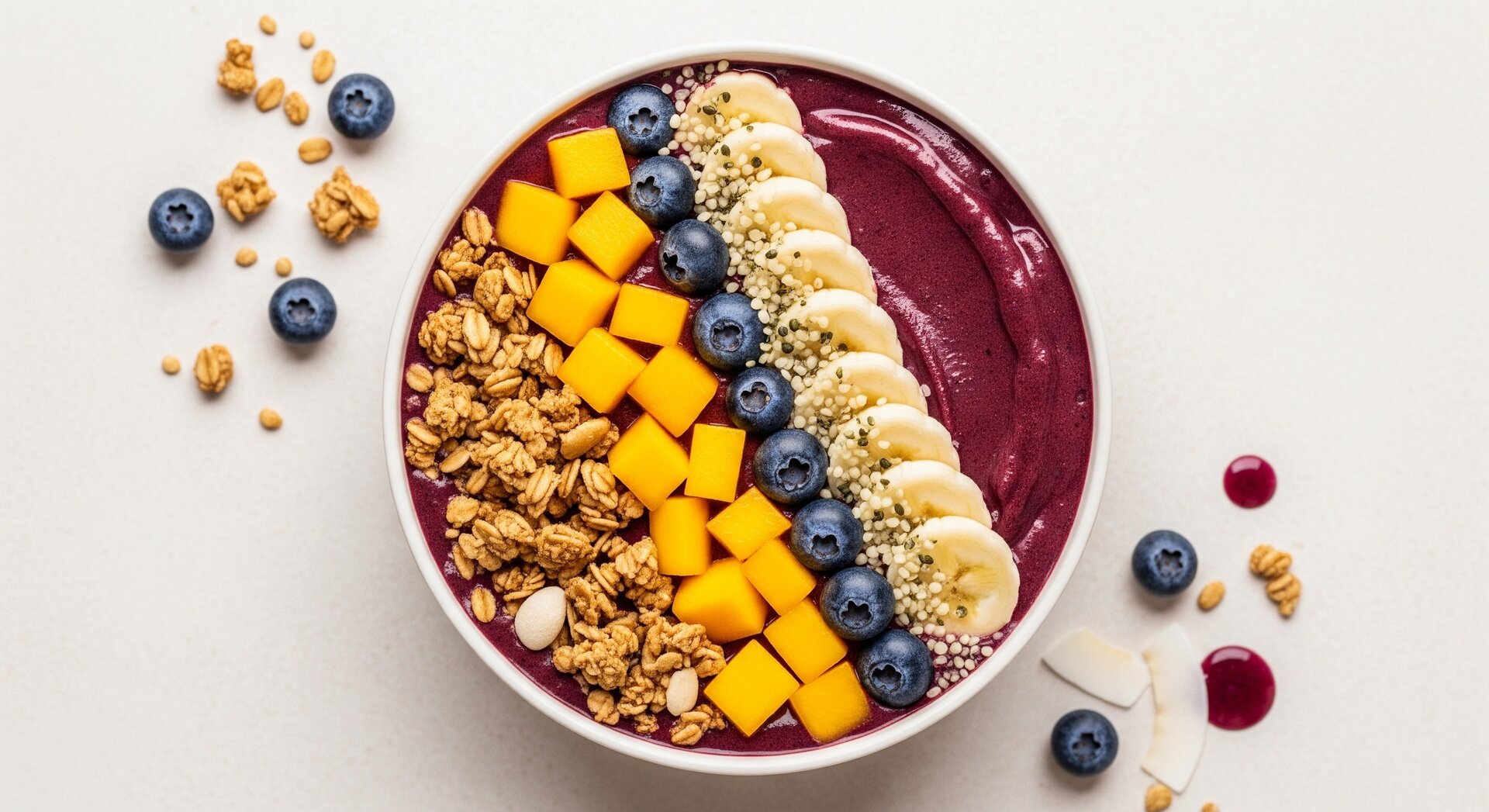 Tropical Açaí Protein Bowl 8 min Deep purple Brazilian bowl with hemp seeds and mango 397 kcal 10g protein 1 synergies
  In the Kitchen
Storage
Location:Freezer
Shelf life:12 maanden (bevroren puree), 18 maanden (gevriesdroogd poeder)
Outside its region of origin, açaí is usually sold frozen because fresh berries spoil quickly. Store frozen puree in the freezer until use. Freeze-dried powder keeps best in an airtight container, cool and dark. Use thawed puree within 24 hours and do not refreeze it.
Preparation
Use açaí cold or frozen. For a thick smoothie bowl, blend 100 g frozen puree with half a frozen banana and as little liquid as possible. Finish with granola, fruit, nuts or coconut. Powder can be stirred into smoothies or yogurt; 1–2 tablespoons is a practical serving. Avoid prolonged heating, as color and aroma decline faster.
Conversions
Substitutes
Smart preparation
1Use frozen açaí pulp; fresh berries are rarely available outside Brazil.
2Blend frozen açaí pulp with a small amount of liquid for a thick bowl.
3Let frozen açaí soften for about 5 minutes before blending.
Why?
Slightly softened açaí blends more evenly and puts less strain on the blender.
Caution / Warnings
Açaí is very safe, but there are scientific considerations:
Pollen Allergy Mild
Cross-reactivity is possible with pollen allergies, especially in people sensitive to birch pollen. This may cause tingling, itching or swelling in the mouth and throat.
Advice:
Test tolerance with a small amount. Avoid açaí if clear symptoms such as itching or swelling in the mouth occur.
Exaggerated Marketing Claims Mild
Açaí is sometimes promoted with big promises around slimming or anti-aging. Available studies mainly examine composition, polyphenols and metabolic markers; they do not show exceptional weight loss from açaí alone.
Advice:
Use açaí as part of a varied eating pattern. Prefer unsweetened frozen puree or powder without added sugar.
MRI Scans (Very Rare) Mild
With very high daily intake, caution is sometimes mentioned because of possible mineral-related effects on imaging, although this is not relevant with normal consumption.
Advice:
With a planned MRI and very high daily açaí intake (>200 g/day): mention this to your doctor. With occasional use, this is normally not needed.
Traditional use
Indigenous
Amazon rainforest staple food
Indigenous peoples and Caboclo communities in the Amazon region have eaten açaí for centuries as a staple food. The berries are traditionally processed into a thick purple paste and often eaten with cassava flour or fish.
Summary
Açaí is a deep purple Amazon berry mostly sold as unsweetened frozen puree or freeze-dried powder. The berry contains anthocyanins, fiber and a relatively high fat content for fruit, including oleic acid. In bowls, açaí pairs well with banana, granola, cocoa, coconut and nuts. Prefer an unsweetened base, because many commercial bowls contain extra sugar or large topping portions. Açaí is not a slimming ingredient on its own, but a flavorful, nutrient-rich base for cold breakfast and snack dishes.