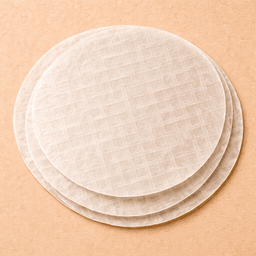
Rice Paper
the transparent wrapper
What is this ingredient?
Rice paper (banh trang) is a Vietnamese invention that has been used for centuries for both fresh and fried spring rolls. The sheets are made by steaming a thin layer of rice flour batter on cotton cloths, then drying them in the sun.
The result is a nearly calorie-free wrapper that directs all attention to the filling. The tapioca starch makes the sheets elastic after soaking without tearing. Combine them with fresh vegetables, herbs, and a protein source for a light, complete meal that doesn't feel heavy.
Rice paper is naturally gluten-free and contains no egg, making it suitable for celiac patients and vegans.
How does it taste?
Nearly flavorless and translucent, becomes pliable and chewy when moistened.
Pairs well with:
Pairs well with shrimpmintrice noodlespeanut sauce and mango.
Did you know...?
- Rice paper was originally made in Vietnam by steaming rice batter on cotton cloths.
- Despite its name, rice paper often contains tapioca flour for extra elasticity.
Nutritional Value & Energy
Per 100g
Rice Paper provides energy thanks to natural nutrients .
Per 100g
Minerals
Vitamins
Omega-3 fatty acids
More nutrients
B-Vitamins
Trace Minerals
What's in a serving?
1 serving (dry)
Rice Paper naturally contains manganese (0.3 mg per 100 g).
% of daily reference intake (DRI)
EU-approved nutrition claims
This ingredient contains nutrients for which EFSA-authorized health claims exist (at nutrient level, not ingredient-specific).
Approved health claims (EU)
Manganese EU 432/2012
Manganese contributes to normal energy-yielding metabolism
Contains 0.3mg/100g (threshold: ≥0.3mg/100g)
Manganese EU 432/2012
Manganese contributes to the maintenance of normal bones
Contains 0.3mg/100g (threshold: ≥0.3mg/100g)
Manganese EU 432/2012
Manganese contributes to the normal formation of connective tissue
Contains 0.3mg/100g (threshold: ≥0.3mg/100g)
Manganese EU 432/2012
Manganese contributes to the protection of cells from oxidative stress
Contains 0.3mg/100g (threshold: ≥0.3mg/100g)
What's being researched?
Rice paper in low-calorie diet research
Rice paper is studied as a low-calorie alternative to bread and wraps in dietary interventions. Controlled studies on specific health effects of rice paper are scarce.
Supported by: [1] Feng X (2025) , [2] Rai S (2018)
Recipes with Rice Paper
Discover delicious recipes featuring rice paper:
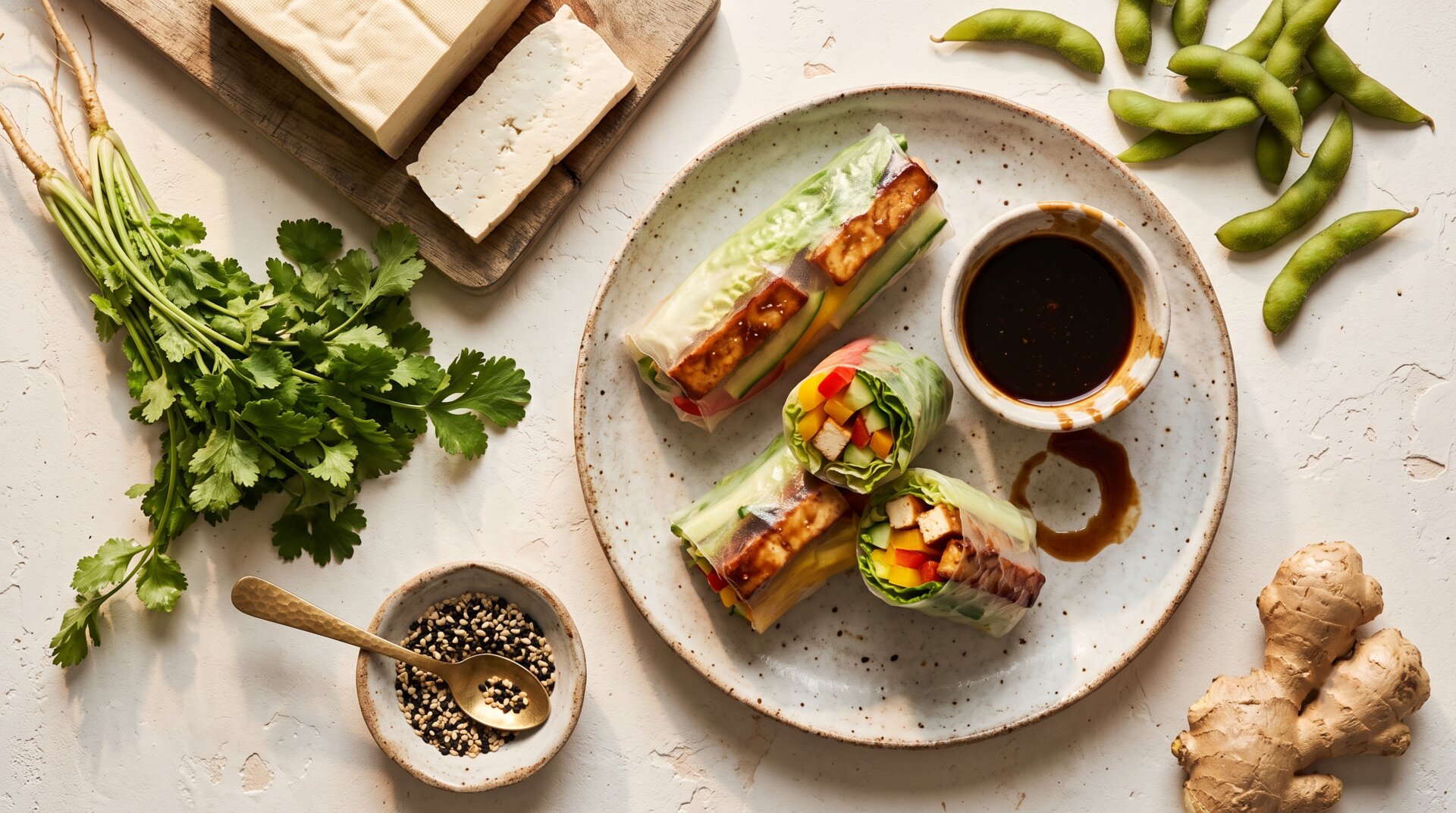 Teriyaki Tofu Rice Paper Wrap with Edamame 30 min Asian gluten-free wrap with crispy teriyaki tofu and edamame
  434 kcal
  23g protein 1 synergies
  In the Kitchen
Storage
Location:Pantry
Shelf life:1-2 jaar
Store dry and cool. The sheets are fragile, store them flat. Use immediately once soaked.
Preparation
Soak 3-5 seconds in warm water (not boiling!). Place on a damp cutting board, fill and roll up. Too long soaking = too sticky and tearable.
Conversions
Substitutes
Smart preparation
1Briefly dip rice paper (5-10 sec) in lukewarm water.
Why?
Soaking too long makes it too limp and it tears.
2Place soaked rice paper on a damp cutting board to fill.
3Do not use hot water, lukewarm is sufficient for rice paper.
Why?
Hot water makes the paper sticky and unmanageable too quickly.
Caution / Warnings
Rice Paper is very safe, but there are scientific considerations:
Type 2 Diabetes Mild
Rice paper is almost pure starch with a high glycemic index, but the amount per sheet is small (8g)
Advice:
The low amount per sheet (25 kcal) makes it less problematic than rice or bread
Summary
The invisible wrapper. Rice paper adds almost nothing except structure, giving the filling all the space. Soak in warm (not hot!) water and fill immediately, they seal themselves.