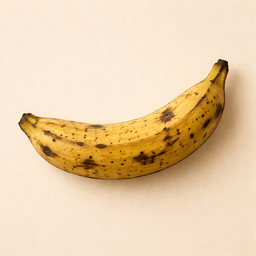
Plantain
The cooking banana from the tropics
What is this ingredient?
Plantain (Musa × paradisiaca), also called cooking banana, is closely related to the dessert banana but differs fundamentally in use and composition. While dessert bananas are eaten raw, plantain must be heated to make the starches digestible. This tropical powerhouse is a daily staple food for millions of people in West Africa, the Caribbean, and Latin America.
## Properties
Unripe (green) plantain is particularly valuable due to its high resistant starch content, a type of fiber that is not digested in the small intestine but functions as a prebiotic in the colon. Research shows that unripe plantain significantly improves blood sugar levels in diabetic patients and is associated with favorable liver markers (Eleazu & Okafor, 2015). The resistant starch in three different plantain products reduced glycemic response in healthy volunteers (Oladele & Williamson, 2016).
## Bioactive Compounds
The properties of plantain are driven by multiple bioactive components. The high potassium content (499mg per 100g) helps regulate blood pressure by excreting sodium through urine and prevents hardening and narrowing of arteries. Soluble plantain fibers block adhesion and M-cell translocation of intestinal pathogens, representing an important novel mechanism by which soluble dietary fibers interact with intestinal pathogens, a finding that is the subject of ongoing scientific research (Roberts et al., 2013).
## Digestive Support
Green plantain has demonstrated clinical value for the digestive tract. In a randomized trial in hospitalized children with persistent diarrhea, green plantain led to shorter diarrhea duration, better weight gain, and lower costs (Alvarez-Acosta et al., 2009). The high fiber concentration, especially hemicelluloses which are higher than in most other vegetables and fruits, forms a physical barrier to enzymatic hydrolysis of starch, lowering blood sugar response.
## Culinary Application
The versatility of plantain lies in its ripening stages. Green (unripe) plantain is firm, has neutral flavor, and is used as a potato substitute: fried (tostones/patacones), boiled in stews, or mashed into fufu. Half-ripe (yellow) plantain has slight sweetness and is fried or grilled. Black (fully ripe) plantain is sweet and used in desserts or as a sweet side dish.
## Cultural Significance
Plantain is more than food—it is cultural heritage. In West Africa, fufu (pounded plantain) is a ceremonial dish. In the Caribbean, fried plantains (tostones) are essential at every meal. In Latin America, preparations vary from Puerto Rican mofongo to Cuban maduros. The plant itself bears fruit within 9-12 months and can produce for multiple years, making it a sustainable staple food.
How does it taste?
Starchy and mildly sweet, becoming softer and sweeter as it ripens and is cooked.
Pairs well with:
Pairs well with cinnamoncoconutblack beanschili and lime.
Did you know...?
- Plantains are starchier and less sweet than regular bananas.
- In many African and Caribbean countries, plantains are a staple food, comparable to potatoes.
Nutritional Value & Energy
Per 100g
Plantain provides energy thanks to natural nutrients , buffered by fiber.
Per 100g
Minerals
Vitamins
Omega-3 fatty acids
More nutrients
B-Vitamins
Trace Minerals
What's in a serving?
1 serving
Plantain naturally contains potassium (499 mg per 100 g).
Plantain naturally contains vitamin c (18.4 mg per 100 g).
Plantain naturally contains vitamin b6 (0.3 mg per 100 g).
% of daily reference intake (DRI)
EU-approved nutrition claims
This ingredient contains nutrients for which EFSA-authorized health claims exist (at nutrient level, not ingredient-specific).
Approved health claims (EU)
Vitamin_c EU 432/2012
Vitamin C contributes to the normal function of the immune system
Contains 18.4mg/100g (threshold: ≥12mg/100g)
Vitamin_c EU 432/2012
Vitamin C contributes to the reduction of tiredness and fatigue
Contains 18.4mg/100g (threshold: ≥12mg/100g)
Vitamin_c EU 432/2012
Vitamin C contributes to normal collagen formation for the normal function of skin
Contains 18.4mg/100g (threshold: ≥12mg/100g)
Potassium EU 432/2012
Potassium contributes to the maintenance of normal blood pressure
Contains 499mg/100g (threshold: ≥300mg/100g)
Vitamin_b6 EU 432/2012
Vitamin B6 contributes to normal cysteine synthesis
Contains 0.3mg/100g (threshold: ≥0.21mg/100g)
Vitamin_b6 EU 432/2012
Vitamin B6 contributes to normal energy-yielding metabolism
Contains 0.3mg/100g (threshold: ≥0.21mg/100g)
Vitamin_b6 EU 432/2012
Vitamin B6 contributes to normal functioning of the nervous system
Contains 0.3mg/100g (threshold: ≥0.21mg/100g)
Vitamin_b6 EU 432/2012
Vitamin B6 contributes to normal homocysteine metabolism
Contains 0.3mg/100g (threshold: ≥0.21mg/100g)
Vitamin_b6 EU 432/2012
Vitamin B6 contributes to normal protein and glycogen metabolism
Contains 0.3mg/100g (threshold: ≥0.21mg/100g)
Vitamin_b6 EU 432/2012
Vitamin B6 contributes to normal psychological function
Contains 0.3mg/100g (threshold: ≥0.21mg/100g)
Vitamin_b6 EU 432/2012
Vitamin B6 contributes to normal red blood cell formation
Contains 0.3mg/100g (threshold: ≥0.21mg/100g)
Vitamin_b6 EU 432/2012
Vitamin B6 contributes to the normal function of the immune system
Contains 0.3mg/100g (threshold: ≥0.21mg/100g)
Vitamin_b6 EU 432/2012
Vitamin B6 contributes to the regulation of hormonal activity
Contains 0.3mg/100g (threshold: ≥0.21mg/100g)
Vitamin_b6 EU 432/2012
Vitamin B6 contributes to the reduction of tiredness and fatigue
Contains 0.3mg/100g (threshold: ≥0.21mg/100g)
Vitamin_c EU 432/2012
Vitamin C contributes to normal collagen formation for the normal function of blood vessels
Contains 18.4mg/100g (threshold: ≥12mg/100g)
Vitamin_c EU 432/2012
Vitamin C contributes to normal collagen formation for the normal function of bones
Contains 18.4mg/100g (threshold: ≥12mg/100g)
Vitamin_c EU 432/2012
Vitamin C contributes to normal collagen formation for the normal function of cartilage
Contains 18.4mg/100g (threshold: ≥12mg/100g)
Vitamin_c EU 432/2012
Vitamin C contributes to normal collagen formation for the normal function of gums
Contains 18.4mg/100g (threshold: ≥12mg/100g)
Vitamin_c EU 432/2012
Vitamin C contributes to normal collagen formation for the normal function of teeth
Contains 18.4mg/100g (threshold: ≥12mg/100g)
Vitamin_c EU 432/2012
Vitamin C contributes to normal energy-yielding metabolism
Contains 18.4mg/100g (threshold: ≥12mg/100g)
Vitamin_c EU 432/2012
Vitamin C contributes to normal functioning of the nervous system
Contains 18.4mg/100g (threshold: ≥12mg/100g)
Vitamin_c EU 432/2012
Vitamin C contributes to normal psychological function
Contains 18.4mg/100g (threshold: ≥12mg/100g)
Vitamin_c EU 432/2012
Vitamin C contributes to the protection of cells from oxidative stress
Contains 18.4mg/100g (threshold: ≥12mg/100g)
Vitamin_c EU 432/2012
Vitamin C contributes to the regeneration of the reduced form of vitamin E
Contains 18.4mg/100g (threshold: ≥12mg/100g)
Vitamin_c EU 432/2012
Vitamin C increases iron absorption
Contains 18.4mg/100g (threshold: ≥12mg/100g)
Vitamin_c EU 432/2012
Vitamin C contributes to maintain the normal function of the immune system during and after intense physical exercise
Contains 18.4mg/100g (threshold: ≥12mg/100g)
Potassium EU 432/2012
Potassium contributes to normal functioning of the nervous system
Contains 499mg/100g (threshold: ≥300mg/100g)
Potassium EU 432/2012
Potassium contributes to normal muscle function
Contains 499mg/100g (threshold: ≥300mg/100g)
What's being researched?
Resistant starch and intestinal flora
Unripe plantains contain resistant starch being researched for prebiotic effects and intestinal flora. Preliminary evidence points to potential beneficial effects on the microbiome.
Supported by: [2] Eleazu (2015) , [4] Roberts (2013) , [5] Alvarez-Acosta (2009)
Glycemic response in plantain
The glycemic response of plantain at different ripeness stages is being studied. Green plantains appear to have a lower glycemic index, but more research is needed.
Supported by: [3] Multiple authors (2017) , [5] Alvarez-Acosta (2009) , [1] Oladele (2016) , [2] Eleazu (2015)
Good Combinations (Synergy)
Combine plantain smartly to enhance the effect:
Plantain 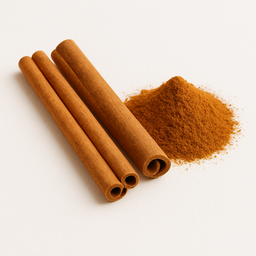 Cinnamon
 Resistant starch + cinnamaldehyde: double glycemic modulation
Resistant starch lowers glycemic response, cinnamaldehyde improves insulin signaling
Technical: Resistant starch from plantain mechanically delays glucose absorption (forms gel in stomach). Cinnamaldehyde from cinnamon modulates GLUT4 translocation. Together they influence glycemic response via two complementary routes: mechanical delay and GLUT4 modulation.
What does this mean for you? Fried plantain with cinnamon combines two pathways influencing glycemic response. The resistant starch delays mechanically, cinnamon modulates via GLUT4. A smart combination for those mindful of carbohydrate processing.
Plantain 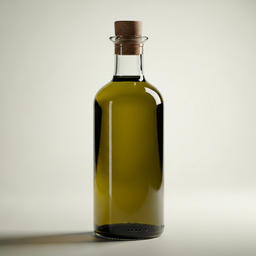 Olive Oil
 Olive oil increases absorption of provitamin A carotenoids from plantain
Dietary fat improves carotenoid bioavailability via micelle formation in the gut (PMID: 15570047)
Technical: Plantain contains beta-carotene (457μg/100g) and alpha-carotene, both fat-soluble provitamin A forms. Oleic acid (73%) from olive oil forms mixed micelles in the gut improving carotenoid absorption up to 3x. Frying in olive oil also breaks down cell walls, releasing carotenoids from the plant matrix.
What does this mean for you? Fry plantain in olive oil rather than dry roasting. The fat ensures you absorb up to 3x more vitamin A precursors. The provitamin A from plantain is fat-soluble — without fat you barely absorb anything.
Plantain  Yogurt
 Synbiotic effect: resistant starch + probiotics increase butyrate
Resistant starch type 2 is fermented to butyrate by Lactobacillus species
Technical: Plantain contains 15-20g resistant starch type 2 per 100g (prebiotic). Lactobacillus from yogurt (probiotic) ferments this starch into short-chain fatty acids, especially butyrate. Butyrate is the primary energy source for colonocytes and modulates NF-κB signaling in the gut.
What does this mean for you? Plantain with yogurt is a perfect synbiotic breakfast — prebiotic + probiotic in one meal. The resistant starch feeds the beneficial bacteria from yogurt, which convert it to butyrate.
Recipes with Plantain
Discover delicious recipes featuring plantain:
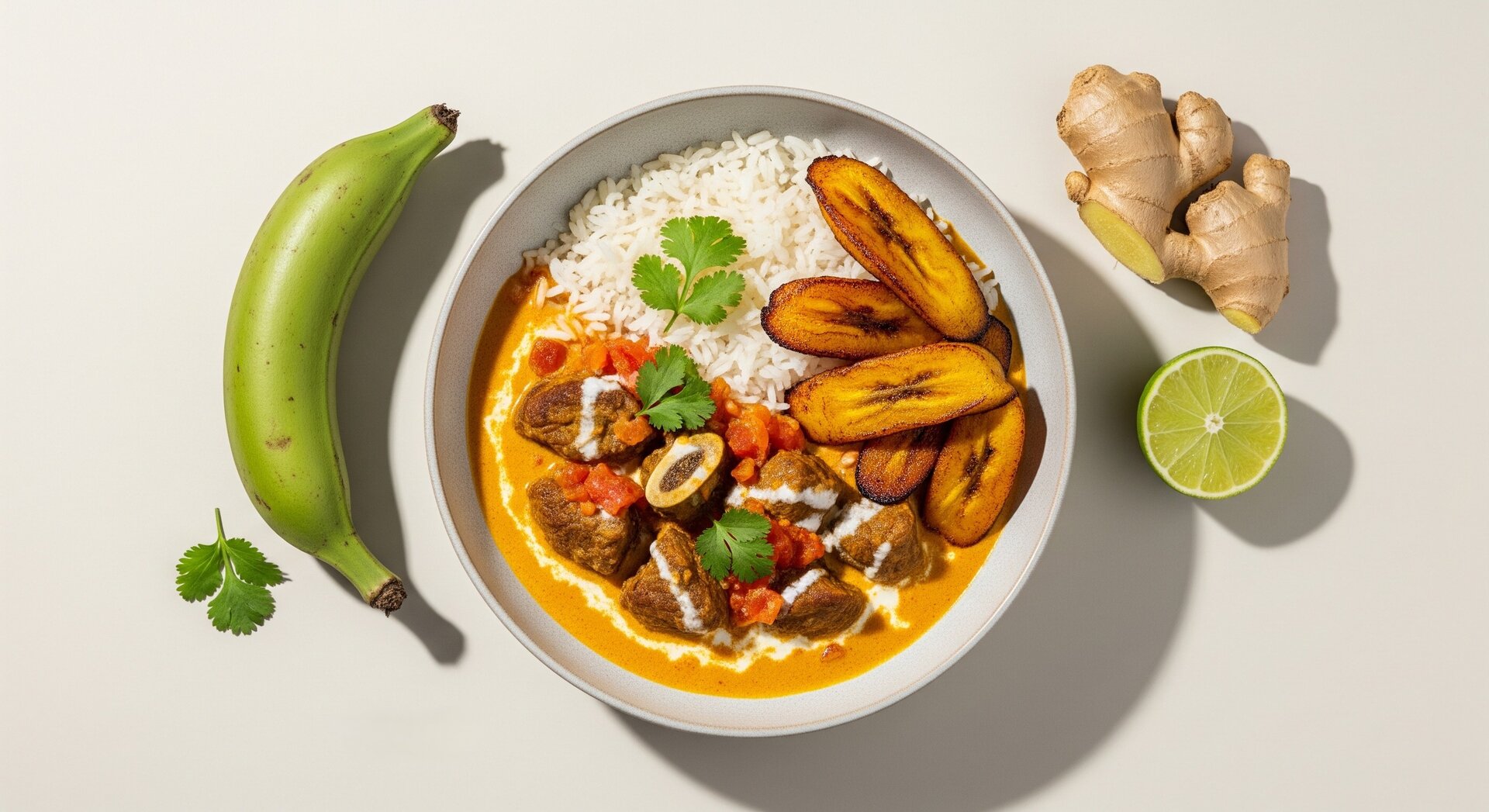 Caribbean Lamb Curry with Rice and Plantain 75 min Spicy curry with coconut milk and sweet plantain
  934 kcal
  48g protein 1 synergies
 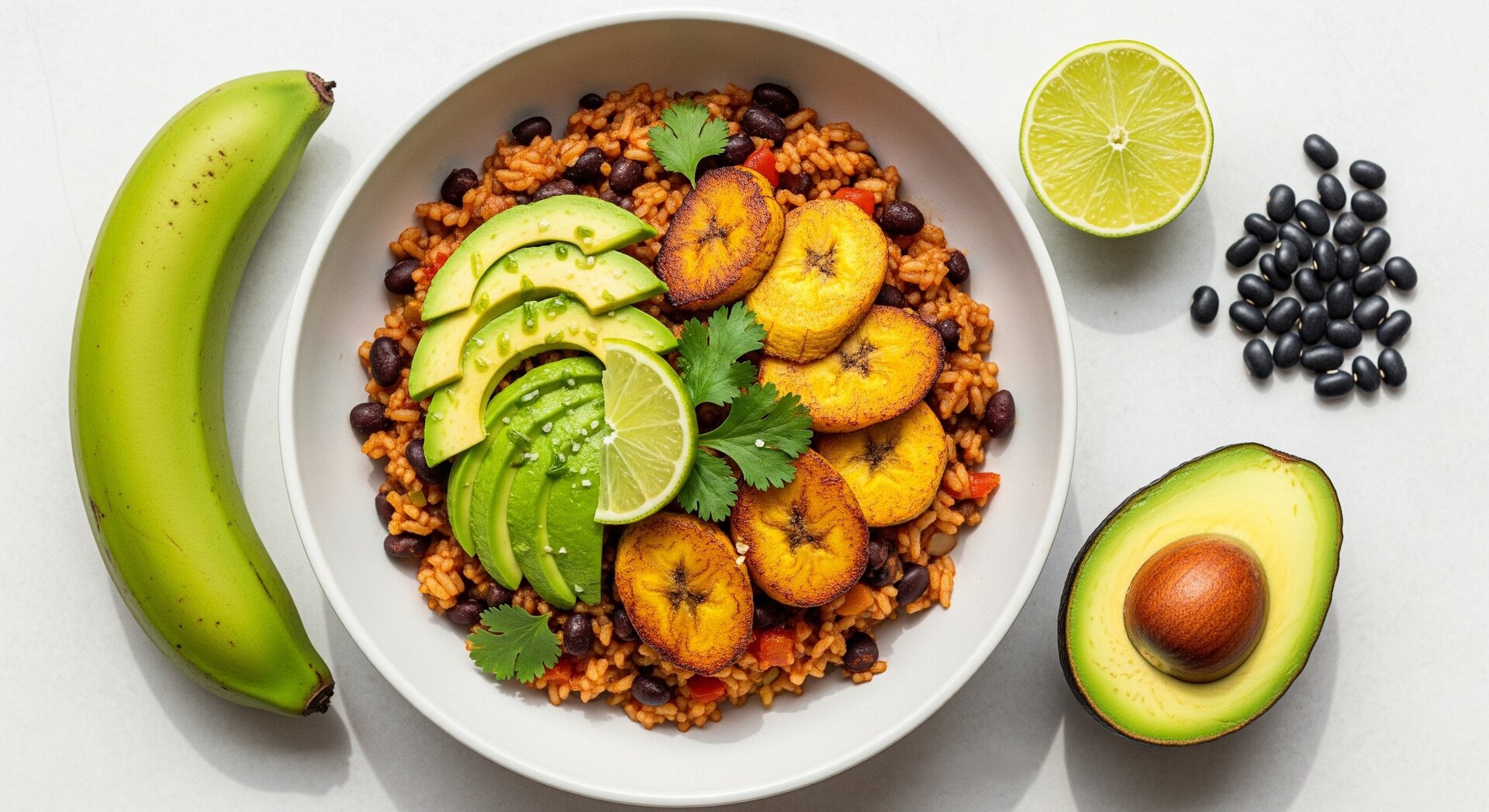 Cuban Moros y Cristianos Bowl 40 min Black beans and rice with sofrito, avocado and plantain 750 kcal 19g protein 2 synergies
 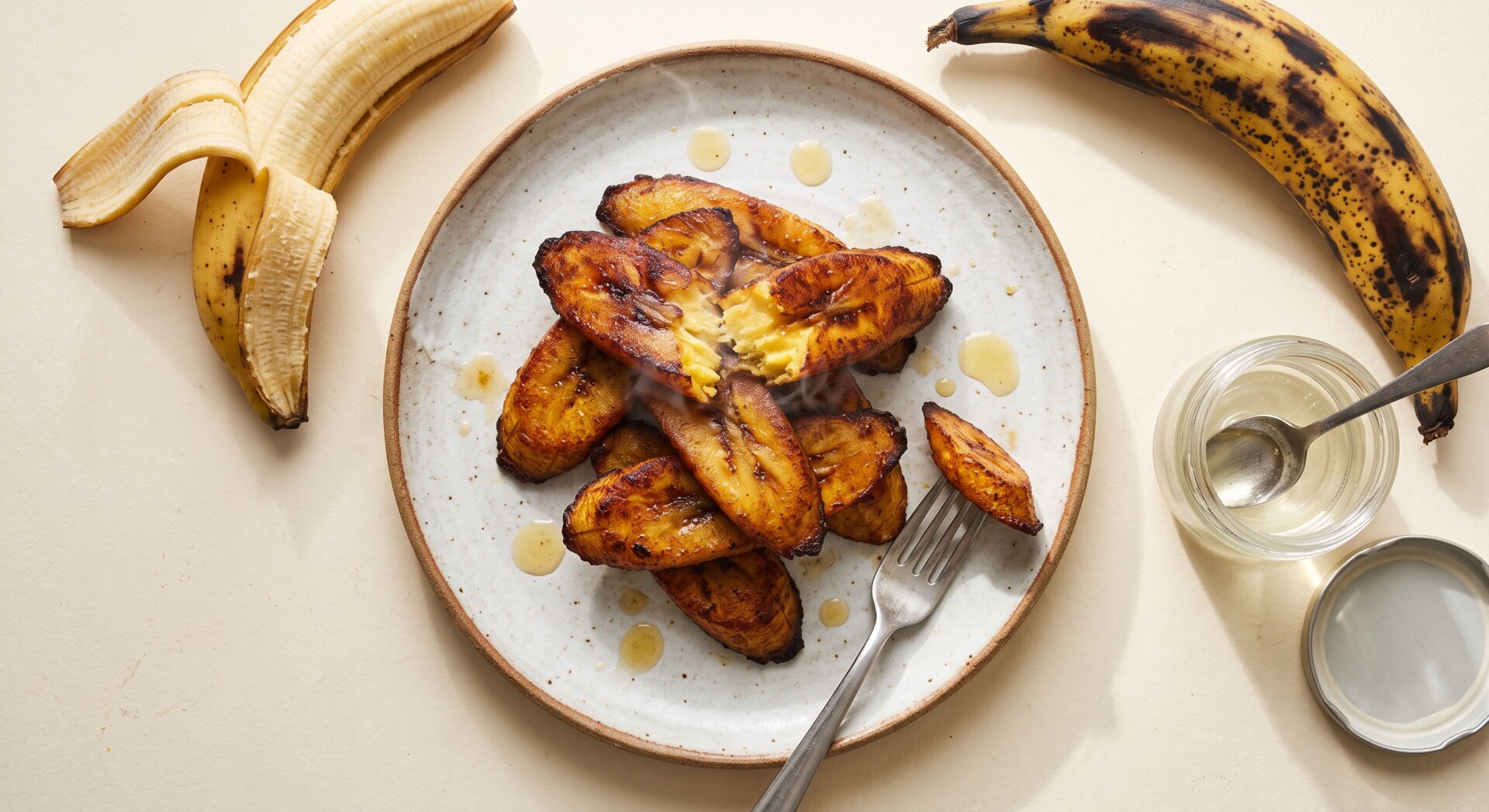 West African Fried Plantain 17 min Ripe plantain fried in coconut oil until golden and caramelised 280 kcal 3g protein 1 synergies
  In the Kitchen
Storage
Location:Pantry
Shelf life:1-2 weken afhankelijk van rijpheid
Green plantain: store at room temperature (18-21°C), ripens in 5-7 days to yellow. Slow ripening by refrigerating (peel turns black but flesh stays good). Ripe (black) plantain: use within 2-3 days or freeze for smoothies.
Preparation
Green plantain: cut ends, make lengthwise incision in peel, remove. Cut into slices/cubes and fry/boil. For tostones: fry 3 min, flatten, fry again until crispy. Half-ripe: fry in slices until golden. Black (ripe): fry slowly in butter until caramelized. Always heat—eating raw is indigestible.
Substitutes
Smart preparation
1Use ripe plantains (black skin) for sweet dishes.
Why?
The darker the skin, the sweeter and softer the flesh.
2Score the skin along the ridges with a knife for easy removal.
3Fry slices in oil until golden brown on both sides.
Caution / Warnings
Plantain is very safe, but there are scientific considerations:
Latex-fruit syndrome Moderate
People with latex allergy may show cross-reaction with plantain due to similar proteins
Advice:
With known latex allergy, first test small amount of plantain under medical supervision. Symptoms may include itching, swelling, or rarely anaphylaxis
Potassium-sparing medication Moderate
The high potassium content may interact with potassium-sparing diuretics and ACE inhibitors
Advice:
When using potassium-sparing medication (spironolactone, enalapril): limit plantain to 1-2× per week and monitor potassium levels. Consult cardiologist
Kidney function disorders Severe
With reduced kidney function, excess potassium cannot be excreted properly
Advice:
With chronic kidney disease (stage 3+): avoid frequent plantain consumption. Consult nephrologist for individual potassium advice
Traditional use
African
West African staple food
In West Africa, plantain has been a staple food for centuries. Traditionally, the peel was used as a compress on skin wounds and insect bites.
Indigenous
Caribbean culinary tradition
In Caribbean culinary tradition, plantain juice was traditionally used for stomach ulcers and digestive problems.
Summary
Plantain is a starchy cooking banana and tropical staple food with 499mg potassium per 100g and resistant starch. The unripe variant is particularly rich in resistant starch and soluble fibers (pectin, hemicelluloses) — components being studied in scientific research for their interaction with gut flora and glucose metabolism.