Dragon Fruit (Pitaya)
Tropical cactus fruit with betalain pigments
What is this ingredient?
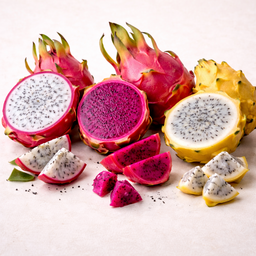
Dragon fruit, or pitaya, grows on a climbing cactus and stands out immediately with its bright pink or yellow skin and green scales. The name refers to its resemblance to dragon scales. The fruit originates from Central America and is now widely grown in tropical regions such as Vietnam, Thailand, Nicaragua and Costa Rica.
What makes dragon fruit distinctive is its betalains: nitrogen-containing plant pigments found mainly in the Caryophyllales plant family, including cacti and beets. Red-fleshed varieties contain betacyanins, while yellow varieties provide betaxanthins. The flesh also contains small edible seeds and oligosaccharides, carbohydrates studied for their fermentation in the large intestine. Red varieties may temporarily color urine and stool pink; this known beeturia phenomenon is generally harmless and disappears on its own.
How does it taste?
Mildly sweet and refreshing with a subtle kiwi-like flavor and crunchy seeds.
Pairs well with:
Pairs well with limemangococonutmint and passion fruit.
Varieties
Hylocereus undatus (white flesh)
Most common variety with pink skin, white flesh, black seeds and a mildly sweet taste.
Hylocereus costaricensis (red flesh)
Pink skin with magenta flesh, vivid color and usually a slightly sweeter taste.
Hylocereus megalanthus (yellow)
Yellow skin with white flesh, small black seeds and usually the sweetest taste of the three.
Did you know...?
- Dragon fruit grows on a cactus that often blooms at night and can be pollinated in nature by bats and moths.
- The plant is also called pitaya and originates from Mexico and Central America.
Nutritional Value & Energy
Per 100g
Dragon Fruit (Pitaya) provides energy thanks to natural nutrients , buffered by fiber.
Per 100g
Minerals
Vitamins
Omega-3 fatty acids
More nutrients
B-Vitamins
Trace Minerals
Low GI means blood sugar doesn't spike quickly.
Low GL means minimal impact on your blood sugar per serving.
What's in a serving?
1 serving
Dragon fruit naturally contains potassium (436 mg per 100 g).
Dragon fruit naturally contains vitamin C (20 mg per 100 g).
% of daily reference intake (DRI)
EU-approved nutrition claims
This ingredient contains nutrients for which EFSA-authorized health claims exist (at nutrient level, not ingredient-specific).
Approved health claims (EU)
Vitamin_c EU 432/2012
Vitamin C contributes to the normal function of the immune system
Contains 20mg/100g (threshold: ≥12mg/100g)
Vitamin_c EU 432/2012
Vitamin C contributes to the reduction of tiredness and fatigue
Contains 20mg/100g (threshold: ≥12mg/100g)
Vitamin_c EU 432/2012
Vitamin C contributes to normal collagen formation for the normal function of skin
Contains 20mg/100g (threshold: ≥12mg/100g)
Vitamin_c EU 432/2012
Vitamin C contributes to normal collagen formation for the normal function of blood vessels
Contains 20mg/100g (threshold: ≥12mg/100g)
Vitamin_c EU 432/2012
Vitamin C contributes to normal collagen formation for the normal function of bones
Contains 20mg/100g (threshold: ≥12mg/100g)
Vitamin_c EU 432/2012
Vitamin C contributes to normal collagen formation for the normal function of cartilage
Contains 20mg/100g (threshold: ≥12mg/100g)
Vitamin_c EU 432/2012
Vitamin C contributes to normal collagen formation for the normal function of gums
Contains 20mg/100g (threshold: ≥12mg/100g)
Vitamin_c EU 432/2012
Vitamin C contributes to normal collagen formation for the normal function of teeth
Contains 20mg/100g (threshold: ≥12mg/100g)
Vitamin_c EU 432/2012
Vitamin C contributes to normal energy-yielding metabolism
Contains 20mg/100g (threshold: ≥12mg/100g)
Vitamin_c EU 432/2012
Vitamin C contributes to normal functioning of the nervous system
Contains 20mg/100g (threshold: ≥12mg/100g)
Vitamin_c EU 432/2012
Vitamin C contributes to normal psychological function
Contains 20mg/100g (threshold: ≥12mg/100g)
Vitamin_c EU 432/2012
Vitamin C contributes to the protection of cells from oxidative stress
Contains 20mg/100g (threshold: ≥12mg/100g)
Vitamin_c EU 432/2012
Vitamin C contributes to the regeneration of the reduced form of vitamin E
Contains 20mg/100g (threshold: ≥12mg/100g)
Vitamin_c EU 432/2012
Vitamin C increases iron absorption
Contains 20mg/100g (threshold: ≥12mg/100g)
Vitamin_c EU 432/2012
Vitamin C contributes to maintain the normal function of the immune system during and after intense physical exercise
Contains 20mg/100g (threshold: ≥12mg/100g)
What's being researched?
Betacyanins and antioxidant capacity
Betacyanins in red-fleshed dragon fruit are being studied for their role as plant pigments and their behavior in laboratory tests around oxidative processes. In-vitro studies show clear activity, while absorption, dosage and human relevance are still being investigated.
Supported by: [1] Nishikito DF (2023) , [3] Kim H (2011)
Oligosaccharides in pitaya
Oligosaccharides in dragon fruit are being studied as non-digestible carbohydrates that can ferment in the large intestine. Early studies describe effects on selected bacterial strains in test models, but larger human studies are needed for firm conclusions.
Supported by: [4] Poolsup N (2017)
Good Combinations (Synergy)
Combine dragon fruit (pitaya) smartly to enhance the effect:
Dragon Fruit (Pitaya) 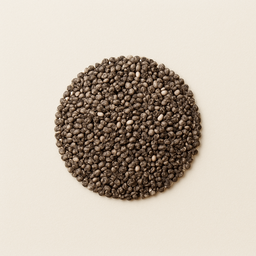 Chia Seeds
 Prebiotic fiber + omega-3 for microbiome and bioactive support
Technical: Dragon fruit contains 3g fiber per 100g (80% soluble pectin and mucilage) acting as prebiotics for Bifidobacterium and Lactobacillus. Chia seeds provide 34g fiber per 100g plus 17.8g ALA omega-3 per 100g. The combination offers both prebiotic fiber (for gut flora) and omega-3 fatty acids (bioactive lipids). Dragon fruit's betacyanins (red pigment) are additional antioxidants.
What does this mean for you? Make a dragon fruit bowl with chia seeds — the spectacular color is not just beautiful but also functional. The fibers from both sources feed your gut flora, while the omega-3 from chia provides bioactive support.
Dragon Fruit (Pitaya) 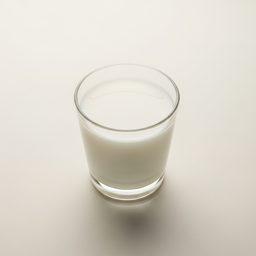 Coconut Milk
 Betalains + MCT fats for antioxidant absorption and energy
Technical: Dragon fruit (red pitaya) contains 32mg betalains per 100g (betacyanins + betaxanthins), unique nitrogen-containing antioxidants with ORAC 10,200 μmol TE/100g. Coconut milk provides MCTs (lauric acid C12, capric acid C10) directly oxidized in liver for rapid ketone production. MCT fats improve betalain absorption through enhanced micelle formation. Betalains inhibit lipid peroxidation and protect LDL cholesterol from oxidation.
What does this mean for you? Dragon fruit smoothie with coconut milk combines exotic antioxidants with quick energy from MCTs. The coconut milk ensures betalains are better absorbed. Perfect as morning or afternoon snack.
Dragon Fruit (Pitaya) 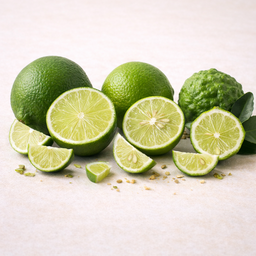 Lime
Lime Vitamin C from lime increases iron absorption from dragon fruit
Technical: Dragon fruit (red variety, Hylocereus costaricensis) contains 1.9mg non-heme iron per 100g — high for a fruit. This iron is in Fe³⁺ form with low bioavailability (2-10%). Vitamin C from lime (29mg per 100g) reduces Fe³⁺ to absorbable Fe²⁺ and forms chelates bypassing phytate binding. Studies show 3-6x higher absorption.
What does this mean for you? Sprinkle dragon fruit with lime juice — not just for exotic flavor but also to make the iron available. Particularly valuable for vegetarians and vegans who need plant-based iron.
Recipes with Dragon Fruit (Pitaya)
Discover delicious recipes featuring dragon fruit (pitaya):
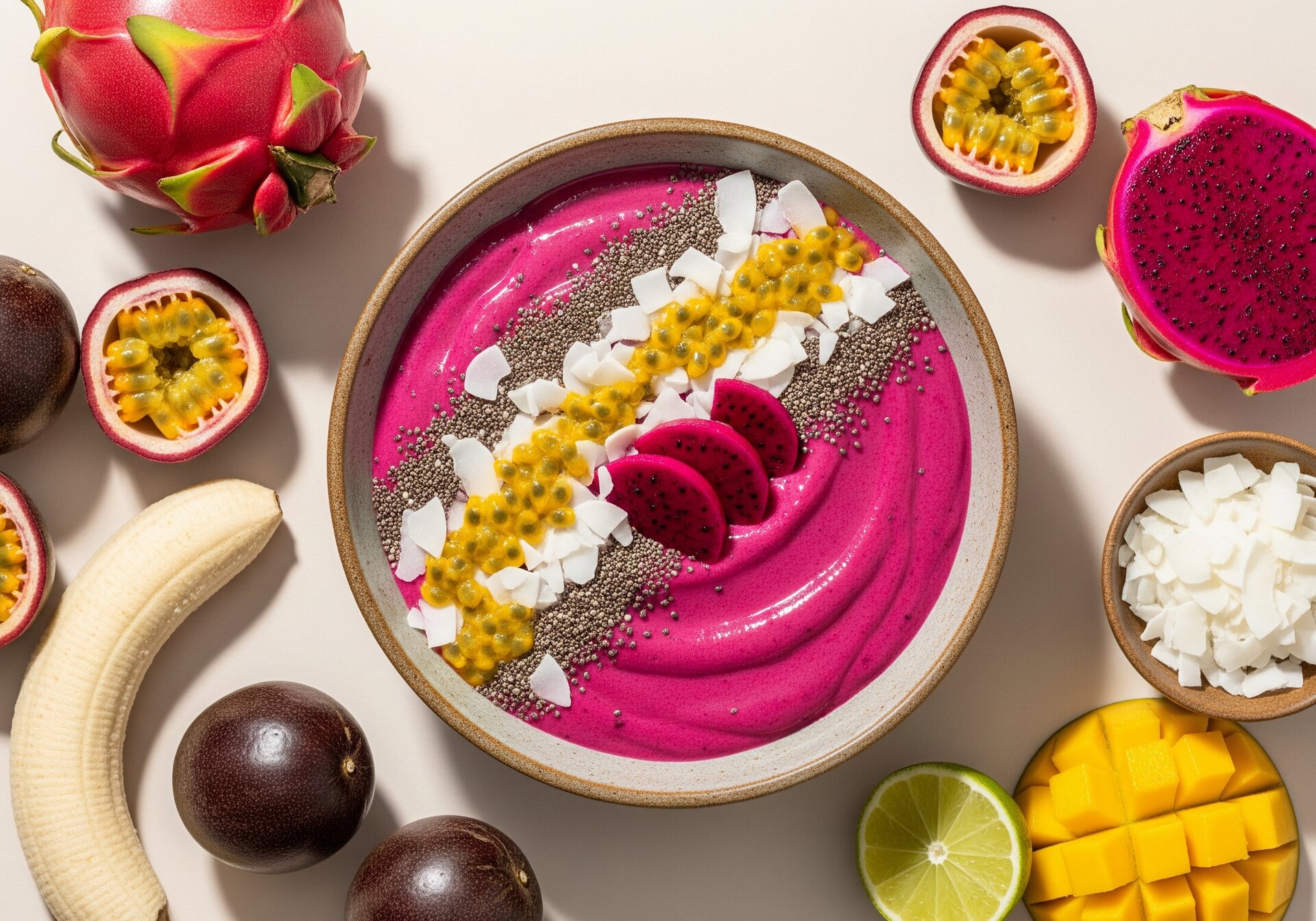 Pink Dragon Fruit Smoothie 5 min Tropical smoothie with pitaya, coconut, mango and passion fruit
  320 kcal
  5g protein 1 synergies
  In the Kitchen
Storage
Location:Refrigerator
Shelf life:5-7 dagen (koelkast), 2-3 dagen (kamertemperatuur)
A ripe dragon fruit yields slightly to pressure, has few green tips on the scales and smells subtly sweet. Store whole fruits in the refrigerator for longer shelf life. For freezing: cut into cubes, freeze loose on a tray first, then store in bags. Cut fruit usually keeps for up to 2 days in the refrigerator when sealed airtight. The peel is mainly decorative and is usually not eaten because of its bitter taste.
Preparation
Eat dragon fruit raw and chilled for the best texture and fresh taste. Halve it lengthwise and scoop out the flesh, or peel it like an avocado. The black seeds are edible and add a light crunch. For smoothies, frozen cubes work well with banana and almond milk. In salads, dragon fruit pairs nicely with avocado, lime and mint. Red varieties color other ingredients pink, which is useful for striking bowls and desserts.
Conversions
Substitutes
Smart preparation
1Halve the fruit and scoop out the flesh with a large spoon.
2Serve dragon fruit chilled; its delicate flavor is best when cold.
3Cut dragon fruit into cubes just before serving.
Why?
The flesh becomes watery more quickly if it sits cut for too long.
Caution / Warnings
Dragon Fruit (Pitaya) is very safe, but there are scientific considerations:
Kidney problems (oxalates) Moderate
Dragon fruit contains oxalic acid (~35 mg per 100 g), which may be relevant for people prone to calcium oxalate kidney stones.
Advice:
Limit the portion if you have a history of kidney stones and drink enough water. You can pair it with calcium-rich foods, because calcium can bind oxalate in the intestine.
Beeturia (pink urine or stool) Mild
Red-fleshed dragon fruit contains betacyanins that can temporarily color urine and stool pink or red. This may be surprising, but is usually harmless.
Advice:
This usually disappears within 24 to 48 hours. Contact a doctor if you are unsure or have symptoms.
Allergies (rare) Mild
Allergic reactions to dragon fruit are rare but possible. Watch for signs such as itching, swelling or skin rash.
Advice:
Try a small amount the first time. Avoid the fruit if clear symptoms occur and consult a doctor if symptoms persist.
Traditional use
Southeast Asian
Vietnamese and Central American use
Dragon fruit originates from Central America and was later brought to Southeast Asia. In Vietnam, where the fruit is known as thanh long, pitaya is often eaten chilled as a summer fruit or used in desserts and drinks.
Summary
Dragon fruit is a tropical cactus fruit with striking pink or yellow skin, juicy flesh and crunchy black seeds. Red varieties contain betalain pigments that give the magenta color and may also temporarily color urine or stool pink. Because of its mild flavor, pitaya works well in smoothie bowls, fruit salads and chilled desserts. Cut it into cubes or scoop the flesh from the peel; the seeds are edible. Choose fruits that yield slightly to pressure and store cut fruit airtight in the refrigerator.