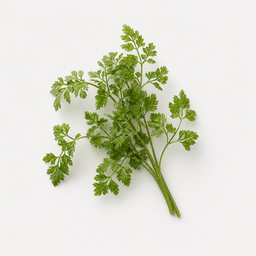
Chervil
The whisper herb of French cuisine
What is this ingredient?
Chervil is the herb you don't taste, but miss when it's not there. Where parsley announces and basil dominates, chervil operates in the margins: a whisper of anise, a hint of parsley, a touch of spring. The French call it the quintessential fine herb for good reason — it is one of the four classic fines herbes, alongside chives, tarragon and parsley.
In the kitchen, use chervil like you would wear perfume: at the last moment, lightly, never too much. Scatter it over a soft-boiled egg with a splash of butter. Stir it through a salad with goat cheese and walnuts. Place it on a cream soup just before serving — the aroma unfolds in the steam.
What makes chervil unique is its transience. Dry it and you have hay. Cook it and you have nothing. The herb forces you into mindfulness in the kitchen: add only at the very last moment, and only when you serve immediately. That discipline rewards you with an aroma no dried herb can match — the scent of a spring garden just after the rain.
How does it taste?
Subtly anise-like with a hint of parsley and a delicate, almost sweet undertone. Much softer than tarragon, finer than parsley. The aroma is so volatile that it only fully reveals itself with immediate use.
Pairs well with:
Eggsbuttergoat cheesecream soupsasparagusfishlemonchivestarragonparsley. Avoid strong spices that overshadow the subtle aroma.
Did you know...?
- Chervil is one of the four classic fines herbes of French cuisine — alongside chives, tarragon and parsley. It is the only herb in the blend that cannot withstand heat.
Nutritional Value & Energy
Per 100g
Chervil provides energy thanks to natural nutrients , buffered by fiber.
Per 100g
Minerals
Vitamins
Omega-3 fatty acids
More nutrients
B-Vitamins
Trace Minerals
EU-approved nutrition claims
This ingredient contains nutrients for which EFSA-authorized health claims exist (at nutrient level, not ingredient-specific).
Approved health claims (EU)
Iron EU 432/2012
Iron contributes to normal energy-yielding metabolism
Contains 31.9mg/100g (threshold: ≥2.1mg/100g)
Iron EU 432/2012
Iron contributes to the reduction of tiredness and fatigue
Contains 31.9mg/100g (threshold: ≥2.1mg/100g)
Calcium EU 432/2012
Calcium is needed for the maintenance of normal bones
Contains 1346mg/100g (threshold: ≥120mg/100g)
Potassium EU 432/2012
Potassium contributes to the maintenance of normal blood pressure
Contains 4740mg/100g (threshold: ≥300mg/100g)
Calcium EU 432/2012
Calcium is needed for the maintenance of normal teeth
Contains 1346mg/100g (threshold: ≥120mg/100g)
Calcium EU 432/2012
Calcium contributes to normal blood clotting
Contains 1346mg/100g (threshold: ≥120mg/100g)
Calcium EU 432/2012
Calcium contributes to normal energy-yielding metabolism
Contains 1346mg/100g (threshold: ≥120mg/100g)
Calcium EU 432/2012
Calcium contributes to normal muscle function
Contains 1346mg/100g (threshold: ≥120mg/100g)
Calcium EU 432/2012
Calcium contributes to normal neurotransmission
Contains 1346mg/100g (threshold: ≥120mg/100g)
Calcium EU 432/2012
Calcium contributes to the normal function of digestive enzymes
Contains 1346mg/100g (threshold: ≥120mg/100g)
Calcium EU 432/2012
Calcium has a role in the process of cell division and specialisation
Contains 1346mg/100g (threshold: ≥120mg/100g)
Iron EU 432/2012
Iron contributes to normal cognitive function
Contains 31.9mg/100g (threshold: ≥2.1mg/100g)
Iron EU 432/2012
Iron contributes to normal formation of red blood cells and haemoglobin
Contains 31.9mg/100g (threshold: ≥2.1mg/100g)
Iron EU 432/2012
Iron contributes to normal oxygen transport in the body
Contains 31.9mg/100g (threshold: ≥2.1mg/100g)
Iron EU 432/2012
Iron contributes to the normal function of the immune system
Contains 31.9mg/100g (threshold: ≥2.1mg/100g)
Iron EU 432/2012
Iron has a role in the process of cell division
Contains 31.9mg/100g (threshold: ≥2.1mg/100g)
Potassium EU 432/2012
Potassium contributes to normal functioning of the nervous system
Contains 4740mg/100g (threshold: ≥300mg/100g)
Potassium EU 432/2012
Potassium contributes to normal muscle function
Contains 4740mg/100g (threshold: ≥300mg/100g)
Comparison
vspeterselie
Chervil and parsley are related (Apiaceae family), but chervil has a softer, anise-like aroma while parsley tastes more robust and green. Chervil cannot tolerate heat; parsley is more heat-resistant.
Recipes with Chervil
Discover delicious recipes featuring chervil:
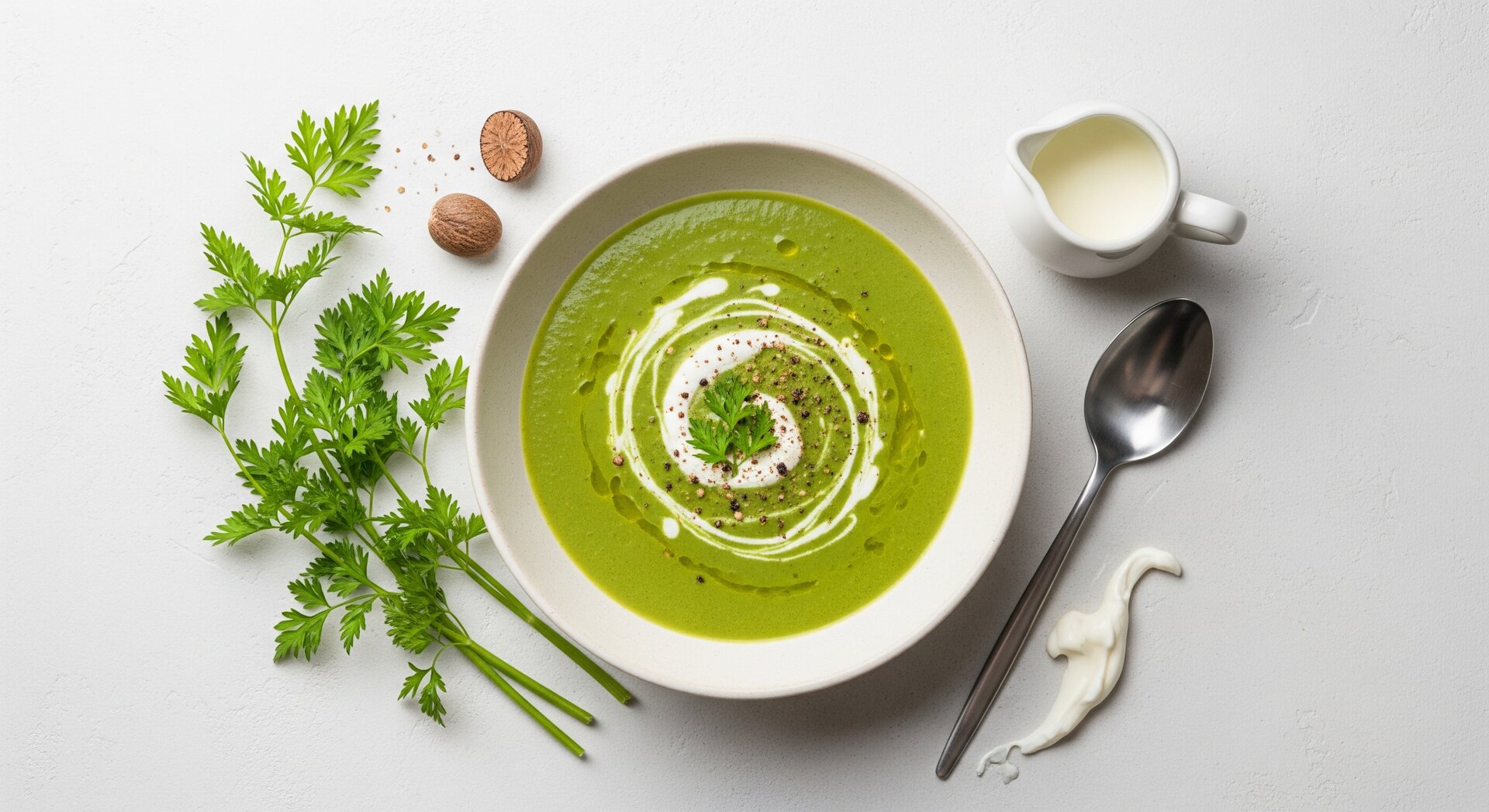 Belgian Chervil Soup with Cream 40 min Classic spring soup with fresh chervil, potato and a hint of nutmeg
  265 kcal
  5g protein 2 synergies
  In the Kitchen
Storage
Location:Refrigerator
Shelf life:3-4 dagen vers, niet geschikt voor drogen
Store fresh chervil with stems in a glass of water, covered with a plastic bag, in the fridge. Or wrap in a damp kitchen towel. Chervil does not dry well — it loses virtually all its aroma. Freezing in ice cubes with a splash of water is a better alternative.
Preparation
Chervil is NEVER cooked along. Always add it raw at the very last moment, just before serving. When heated, the volatile aromatic compounds evaporate within seconds. In warm dishes: place the leaves on the plate, not in the pan.
Conversions
Substitutes
Smart preparation
1ALWAYS add chervil last, just before serving
Why?
The volatile aromatic compounds in chervil evaporate at heat within seconds. Cooking destroys the aroma completely.
Caution / Warnings
Chervil is very safe, but there are scientific considerations:
Apiaceae allergy Moderate
People with an Apiaceae allergy (parsley, celery, carrot) may also react to chervil due to shared protein structures
Advice:
With known cross-allergy to celery or parsley, avoid chervil or test carefully with a small amount
Traditional use
Mediterranean
French culinary herb since the Middle Ages
Chervil was brought to France by monks from the Caucasus during the Middle Ages. It became one of the four fines herbes — the cornerstone of the French herb blend alongside chives, tarragon and parsley. In classic French cuisine, bearnaise sauce without chervil is unthinkable.
Summary
Chervil is a fine, delicate herb with a subtle anise aroma best used fresh. It is one of the four classic fines herbes of French cuisine. Always add chervil at the very last moment — the aroma completely disappears when heated. Ideal over eggs, in salads, on soups and in delicate sauces. Store fresh chervil in a damp cloth in the fridge, up to 3-4 days.