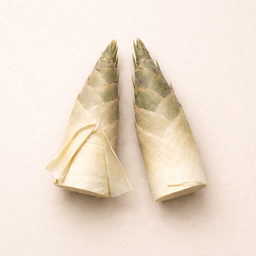
Bamboo Shoots
Crunchy Asian Delicacy
What is this ingredient?
Bamboo shoots are the young, edible sprouts of various bamboo species, harvested before they harden. They contain phenolic compounds such as protocatechuic acid, ferulic acid, and chlorogenic acid, as well as bioactive peptides. IMPORTANT: raw bamboo shoots contain cyanogenic glycosides (especially taxiphyllin), which can release hydrogen cyanide. Therefore, bamboo MUST always be cooked before consumption—this breaks down 90-97% of the cyanide compounds. After proper preparation, bamboo shoots are safe and nutritious, with only 27 calories per 100g but rich in fiber and potassium.
How does it taste?
Mild, slightly sweet and crunchy with a subtle earthy flavor.
Pairs well with:
Pairs well with soy saucesesame oilgingershiitake and rice.
Did you know...?
- Bamboo is the fastest growing plant on earth and can grow up to 91 cm per day.
- Bamboo shoots must be cooked before consumption to remove natural toxins.
Nutritional Value & Energy
Per 100g
Bamboo Shoots is low in calories thanks to natural nutrients , buffered by fiber.
Per 100g
Minerals
Vitamins
Omega-3 fatty acids
More nutrients
B-Vitamins
Trace Minerals
What's in a serving?
1 serving
Bamboo Shoots naturally contains potassium (533 mg per 100 g).
Bamboo Shoots naturally contains vitamin b6 (0.24 mg per 100 g).
Bamboo Shoots naturally contains copper (0.19 mg per 100 g).
% of daily reference intake (DRI)
EU-approved nutrition claims
This ingredient contains nutrients for which EFSA-authorized health claims exist (at nutrient level, not ingredient-specific).
Approved health claims (EU)
Potassium EU 432/2012
Potassium contributes to the maintenance of normal blood pressure
Contains 533mg/100g (threshold: ≥300mg/100g)
Vitamin_b6 EU 432/2012
Vitamin B6 contributes to normal cysteine synthesis
Contains 0.24mg/100g (threshold: ≥0.21mg/100g)
Vitamin_b6 EU 432/2012
Vitamin B6 contributes to normal energy-yielding metabolism
Contains 0.24mg/100g (threshold: ≥0.21mg/100g)
Vitamin_b6 EU 432/2012
Vitamin B6 contributes to normal functioning of the nervous system
Contains 0.24mg/100g (threshold: ≥0.21mg/100g)
Vitamin_b6 EU 432/2012
Vitamin B6 contributes to normal homocysteine metabolism
Contains 0.24mg/100g (threshold: ≥0.21mg/100g)
Vitamin_b6 EU 432/2012
Vitamin B6 contributes to normal protein and glycogen metabolism
Contains 0.24mg/100g (threshold: ≥0.21mg/100g)
Vitamin_b6 EU 432/2012
Vitamin B6 contributes to normal psychological function
Contains 0.24mg/100g (threshold: ≥0.21mg/100g)
Vitamin_b6 EU 432/2012
Vitamin B6 contributes to normal red blood cell formation
Contains 0.24mg/100g (threshold: ≥0.21mg/100g)
Vitamin_b6 EU 432/2012
Vitamin B6 contributes to the normal function of the immune system
Contains 0.24mg/100g (threshold: ≥0.21mg/100g)
Vitamin_b6 EU 432/2012
Vitamin B6 contributes to the regulation of hormonal activity
Contains 0.24mg/100g (threshold: ≥0.21mg/100g)
Vitamin_b6 EU 432/2012
Vitamin B6 contributes to the reduction of tiredness and fatigue
Contains 0.24mg/100g (threshold: ≥0.21mg/100g)
Copper EU 432/2012
Copper contributes to the maintenance of normal connective tissues
Contains 0.19mg/100g (threshold: ≥0.15mg/100g)
Copper EU 432/2012
Copper contributes to normal energy-yielding metabolism
Contains 0.19mg/100g (threshold: ≥0.15mg/100g)
Copper EU 432/2012
Copper contributes to normal functioning of the nervous system
Contains 0.19mg/100g (threshold: ≥0.15mg/100g)
Copper EU 432/2012
Copper contributes to normal hair pigmentation
Contains 0.19mg/100g (threshold: ≥0.15mg/100g)
Copper EU 432/2012
Copper contributes to normal iron transport in the body
Contains 0.19mg/100g (threshold: ≥0.15mg/100g)
Copper EU 432/2012
Copper contributes to normal skin pigmentation
Contains 0.19mg/100g (threshold: ≥0.15mg/100g)
Copper EU 432/2012
Copper contributes to the normal function of the immune system
Contains 0.19mg/100g (threshold: ≥0.15mg/100g)
Copper EU 432/2012
Copper contributes to the protection of cells from oxidative stress
Contains 0.19mg/100g (threshold: ≥0.15mg/100g)
Potassium EU 432/2012
Potassium contributes to normal functioning of the nervous system
Contains 533mg/100g (threshold: ≥300mg/100g)
Potassium EU 432/2012
Potassium contributes to normal muscle function
Contains 533mg/100g (threshold: ≥300mg/100g)
What's being researched?
Fiber content and digestion
The high fiber content of bamboo shoots is being studied in relation to the gut microbiome and satiety. Observational studies suggest possible benefits for digestion.
Supported by: [1] Nongdam (2014) , [4] Ma T (2024)
Phenolic compounds and antioxidant activity
Phenolic compounds in bamboo shoots are being studied for their antioxidant capacity. In-vitro studies show activity, but clinical relevance remains to be established.
Supported by: [4] Ma T (2024) , [2] Park (2012)
Recipes with Bamboo Shoots
Discover delicious recipes featuring bamboo shoots:
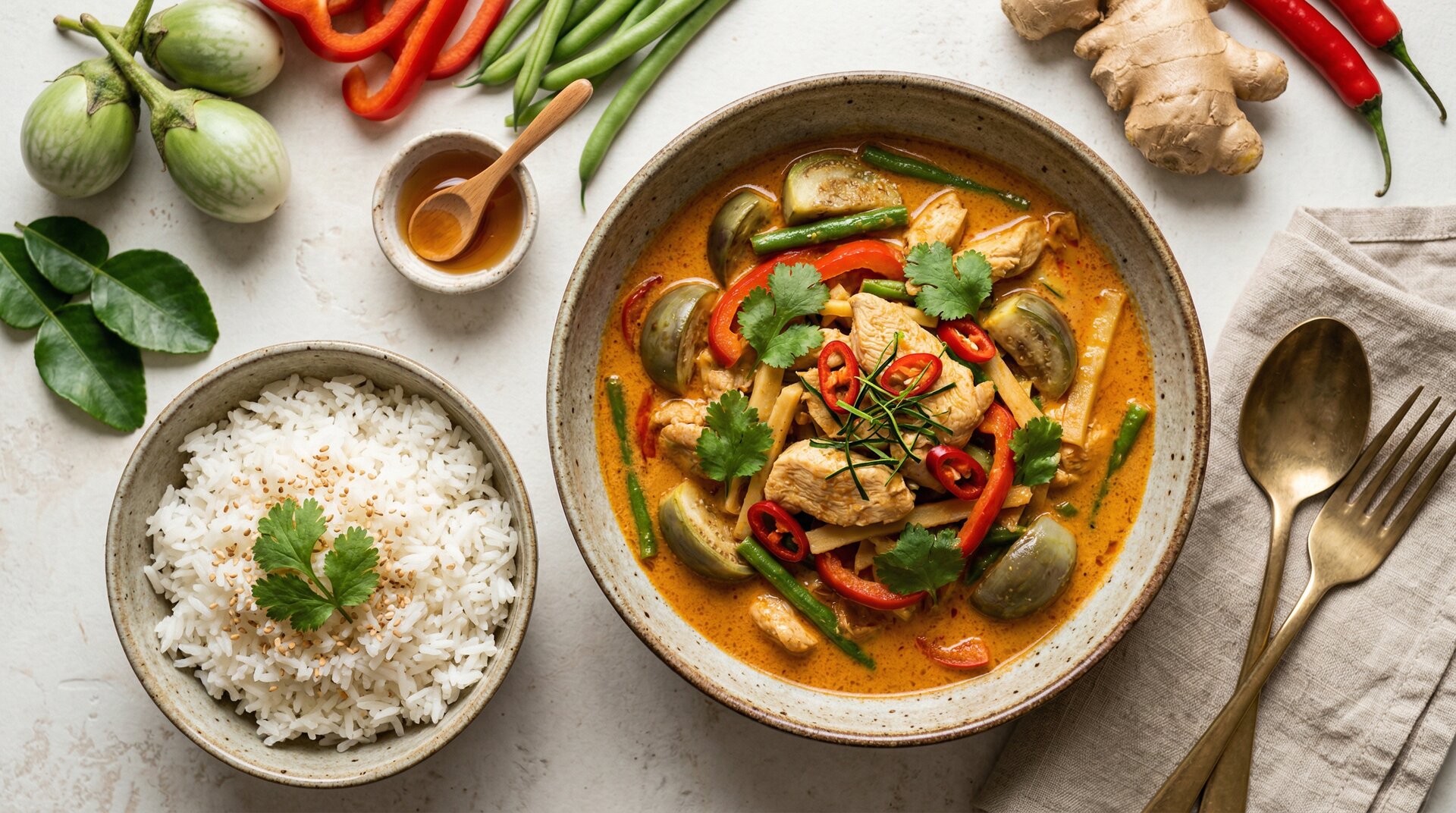 Thai Red Curry with Coconut Milk, Chicken & Jasmine Rice 45 min Creamy red curry with tender chicken, eggplant and green beans
  782 kcal
  38g protein 1 synergies
  In the Kitchen
Storage
Location:Refrigerator
Shelf life:Vers: 1-2 weken / Uit blik geopend: 3-5 dagen
Store fresh bamboo shoots in the refrigerator, covered with water that is refreshed daily. From can: transfer leftovers to airtight container with water, refrigerate.
Preparation
Fresh bamboo shoots: peel, slice, and boil in ample water for 10-20 minutes (or longer for complete cyanide reduction). Discard water. From can: rinse and use directly. Add to stir-fries, curries, ramen, or soups. Stay crunchy after cooking.
Conversions
Substitutes
Smart preparation
1Boil fresh bamboo shoots for at least 20 minutes to remove bitterness.
Why?
Boiling breaks down the natural bitter compounds.
2Rinse canned bamboo shoots well before use.
3Cut bamboo shoots just before serving; they lose their crunch quickly.
Caution / Warnings
Bamboo Shoots is very safe, but there are scientific considerations:
Raw Consumption (Cyanogenic Glycosides) Severe
Raw bamboo shoots contain taxiphyllin, a cyanogenic glycoside that can release hydrogen cyanide (HCN) and cause acute cyanide poisoning
Advice:
ALWAYS cook before consumption. Optimal: peel, slice, and cook at 98-102°C for at least 10-15 minutes (148-180 min reduces cyanide by 97%). NEVER use raw bamboo shoots. Canned bamboo shoots are already safely processed.
ACE Inhibitors and Blood Pressure Medication Moderate
Bamboo peptides have ACE-inhibitory properties and may enhance blood pressure-lowering effects of medication
Advice:
When using blood pressure medication: monitor blood pressure regularly and consult your doctor with very high consumption. Normal culinary amounts are generally safe.
Traditional use
Traditional Chinese Medicine
Chinese cooling food
In traditional Chinese medicine, bamboo shoots are considered cooling and phlegm-resolving. They were prescribed for fever and to dispel excess heat.
Ayurveda
Ayurvedic use
In Ayurveda, bamboo shoots were used as a purifying food and for joint complaints. Bamboo leaf extract was prepared as a fever-reducing drink.
Summary
Bamboo shoots are crunchy, fiber-rich, and at only 27 calories perfect for weight management. They contain bioactive peptides and phenolic antioxidants that support heart and blood pressure. CAUTION: ALWAYS use cooked bamboo shoots—never raw—due to cyanogenic glycosides. Canned products are safely pre-treated. Delicious in stir-fries, curries, and soups.